| OCR Text |
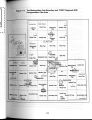
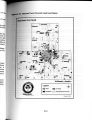
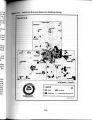
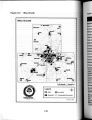
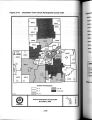
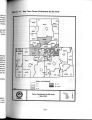
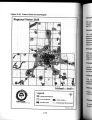
Show In this scenario, population and employment projections for each county and Minor Civil Division (MCD's) in the region were developed and allocated for the year 2025, into the 834 Traffic Analysis Zones (TAZ's) previously developed by the TCRPC as part of its regional traffic forecasting model and used in its transportation planning program. The allocation to TAZ's considered existing developable land, local zoning and development proposals as well as some environmental features (such as soils, slopes, access and wetlands), but not urban service considerations or preservation of agricultural land. Considerable manipulation was required to translate the population and employment projections into this land use scenario. Briefly described, the steps were as follows: 1. Utilizing existing residential and employment land use densities (persons/acre and jobs/acre), the population and employment projections were transformed into land use absorption figures, i.e., the acreage estimated to be consumed by new development. 2. Within each TAZ, anticipated new development was placed proximate to existing development. This was done by considering the perimeter and area of existing development and calculating a buffer distance field that, when utilized, would produce a buffer whose area would equal the anticipated development. 3. Some post-processing manipulation was done to avert political difficulties and obvious errors in model specification. For instance, the model inadvertently placed some residential development next to a landfill, which was promptly corrected. Figure 2-10 shows the scenario. Note that under the Adopted Trend or the so called business as usual model, a large amount of residential and commercial/industrial development is anticipated in areas away from urban centers. The impacts of this development pattern will be analyzed later. The Build Out (Existing Zoning) Scenario This scenario (Figure 2-11) also was based on population and employment projections developed at the TAZ level, but represented densities allowed through current community zoning policies. It detailed land amounts and locations of residential and commercial growth throughout the region according to the maximum allowable densities. This type of scenario is a "Build Out" of the region to its logical end state based on current public policies as represented in local zoning ordinances. The build out population numbers were then used in comparing future scenarios against the trend in order to facilitate a discussion on what the ultimate impacts would be on the region sometime in a future century when build out would occur. 2-52 |