| OCR Text |
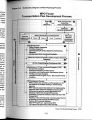
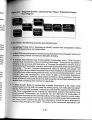
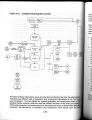
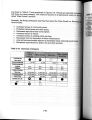
Show looment pattern outlined above. Since more population and employment was being ^eved to urban service areas, many TAZ's experienced substantial increases in *Unlulation and employment densities, a phenomenon not witnessed in the other two scenarios. F' re 2_12 shows the process used in modeling the suitability for various uses in the "Wise Growth" and "Wise Growth Build Out" scenarios and the order in which they were combined. The modeling process was sequential, i.e., individual uses that comprised the output of previous phases were used as inputs for the following phases. When allocating the growth to land throughout the region, the following decision rules were used: • Existing environmental and open space uses were the first uses modeled, as they are the most constrained. Environmental areas included areas of floodplain, steep slope, wetlands and significant vegetation. Growth was minimized in order to preserve sensitive areas. • Next, employment centers were designated. These growth areas could not occur on existing and proposed environmental and open space areas (previously identified) and public sewer/water utility access was required. Employment centers accommodate the "non-retail" employment growth projected by the TCRPC and can include office, industrial and/or warehousing uses. Infill sites were encouraged, but not required. A preference was also given to the existing urbanized area in order to maximize tax revenue, as well as to approximate the service areas of non-capital public services (e.g., police and fire service). Sites required more than one hundred (100) acres of land before they could be considered suitable employment centers. • Residential growth areas were also encouraged (but not required) on lands with existing public sewer, water, utility services and on infill sites. Areas with better overall accessibility (defined by peak-hour access) were encouraged. Densities were not explicitly defined, but were left as a calculated variable when the regional population totals of the Adopted Trend Forecasts (the so called "Business as Usual" and "Build Out" scenarios) were applied (see Impacts section below). Residential development on prime farmland soils was discouraged. A preference for growth in the existing urbanized area was also included. • The last land use designated was retail growth. Existing and proposed residential area locations played the most important role in retail siting, with transportation system accessibility also constituting an important factor. Access to public water, sewer and utility services was also encouraged, but not required. The overall result of the scenario is a very compact regional growth pattern in comparison to the other scenarios, which allows for preservation of significant amounts of farmland, open space and wetlands. 2-57 |