| OCR Text |
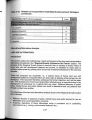
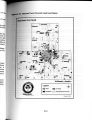
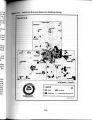
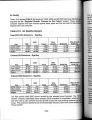
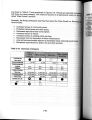
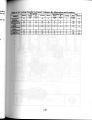
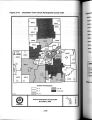
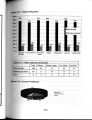
Show istered tnejr "voices and choices" on the region's future. For the first time in the project, the true meaning of all the discussion, planning and dialogue about goals and objectives took a concrete form through the scenarios. Attendees had the chance to carefully examine what the region might look like, based on the path established by various trends and policy decisions. Attendees viewed two different color-coded maps that outlined the region's potential retail, non-retail and residential land growth over the next 20 years. One map showed how the region would look if current trends continued, while the other reflected how the region would look if the project's goals and objectives were fully implemented. They then contrasted these maps against the two Build Out alternatives. Ultimately, attendees viewed over 40 individual quantitative and qualitative impacts for each of the alternatives as shown in Table 2-13 and summarized in Table 2-15. Categories for summarizing these impacts were: Community Services Environmental Cost of Public Services Environmental Justice Utilities Transportation Land Use Quality of Life It should be noted that the data shown in Tables 2-13 and 2-15 were preliminary values which subsequently may have been adjusted in later phases of the project. The second round of Town Forums had a similar format to the first. Trained facilitators led participants in small nominal discussion groups. Participants again used hand-held "OptionFinder" keypads to immediately respond to questions and register input. Figures 2-15 and Table 2-16 summarize voting on the impacts. Selection of the "preferred alternative" is shown on Figure 2-16 and Table 2-17. After assessing the impacts, participants were asked to vote to select which alternative they preferred based on their review of the comparative impacts on each category of impacts between the alternatives. The raw voting scores of the alternatives by impact category are shown in Table 2-16 and the percentage results are depicted graphically in Figure 2-15. Results generally show preference for the so called "Wise Growth" scenario ranged between a low of 81 percent when comparing environmental impacts to a high of 87 percent on land use impacts. At the conclusion of assessment based on each impact category, participants were asked to vote directly for their preferred alternative. Raw vote results of the alternative selection 2-65 |