| OCR Text |
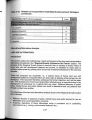
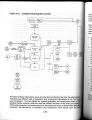
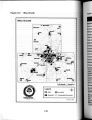
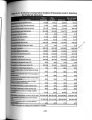
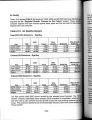
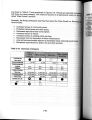
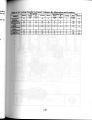
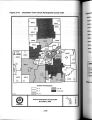
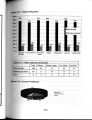
Show The next set of results is determined from regional build out population, employment and households based on current permissible densities in all adopted zoning ordinances within 78 governmental jurisdictions. The current adopted forecasts for 2025 estimate slightly over 550,000 population in the region compared to our current 2000 Census estimate of slightly under 448,000 population. In contrast, under build out based on current zoning, an estimated population threshold permissible under current public policy (adopted zoning) will result in regional population of approximately 1.1 million. The build out population of 1.1 million was also then reallocated to be compatible with the so called "Wise Growth" scenario. TCRPC's travel demand model was then applied to evaluate comparative transportation deficiencies of these land use alternatives. For comparability and modeling purposes, the build out period was compressed to a 2025 time horizon consistent with the current Long Range Plan horizon. All future scenarios were analyzed using the base network (in Michigan this equates to the old Existing Plus Committed network, which basically was limited to projects in the current Transportation Improvement Program and the current Michigan Department of Transportation adopted five year program). Since the Tri-County region is an attainment area, this land use modeling is not subject to a conformity finding and these procedures were deemed acceptable for analysis of regional land use alternatives. The EPA's MOBILE 5b emissions model was then applied to results of the transportation model runs to generate emissions analysis of regional land use alternatives. Input assumptions used in the MOBILE 5B emission model were generally similar to what would have been used in Michigan if a conformity analysis was required. The results shown in Table 2-14 are somewhat interesting and require some interpretation. However, travel model results (see Chapters 9 and 10) showed an increase in congestion, deficiencies and transportation improvement costs in comparing the so called "Wise Growth" scenario to current adopted trends or the so called "Business as Usual" scenario. While this is somewhat counterintuitive, compared to what one might expect under a "Smart Growth scenario", it is a reasonable outcome from the travel model. Concentrating population and employment at higher densities in areas where there is existing infrastructure, as opposed to "business as usual" ("scattered low density development"), and on the existing transportation system without any additional improvements is likely to result in pushing some additional facilities which may have been approaching deficiency into the deficient category and creating some new or additional near deficient segments. Further, since the model network used for land use alternatives analysis also assumed the current existing transit networks, transit service was not optimized in these runs, nor is it possible in these models to adequately account for increased non-motorized trips taken off the network due to various livable, walkable and bike-able community initiatives which are included in the "Wise Growth" scenario. Further, since these are 2025 runs, the additional benefits of five years of additional fleet rollover are not acquired, since emission factors in MOBILE 5b only went out to 2020. At the time of these runs, however the new release of EPA's MOBILE 6, which updates these emission factors and extends them beyond 2025, 2-63 |