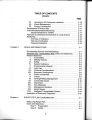
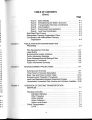
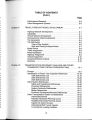
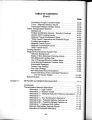
| OCR Text |
Show environmentally sound, provides the foundation for the nation to compete in the global economy and will move people and goods in an energy efficient manner. A significant change made by this law was the enhanced role of local governments working through their Metropolitan Planning Organization (MPO) to direct the expenditure of transportation resources in their planning area. The Tri-County Regional Planning Commission (TCRPC), as the MPO, already has a long history of working with the state, local governments, transit authorities, road commissions, airport authorities and other transportation providers to plan for our current and future transportation needs. The Regional 2015 Transportation Plan adopted in May, 1995 was prepared under law and federal regulations required under the Intermodal Surface Transportation Efficiency Act of 1991 (ISTEA). This Act significantly enhanced the role and requirements for local governments and the Michigan Department of Transportation (MDOT), working through their Metropolitan Planning Organization (MPO), to direct the expenditures of transportation investments within the entire Tri-County region. TCRPC has been the MPO for this region since designated by the governor in 1973, and has been working to coordinate regional transportation decisions continuously since our formation in 1956 - long before there were any federal requirements to coordinate these activities, which were not enacted into federal law until 1963. Transportation Efficiency Act for the Twenty-First Century (TEA-21) The direction established by ISTEA was essentially reaffirmed in TEA-21, but many additional amendments and changes in overall planning requirements were made by TEA-21 when it was enacted by Congress and signed into law in June, 1998. One example includes condensing the so called mandatory planning factors to be considered in the planning and programming process down to seven broader and more general principles. Another similar change was enacted in the National Highway System Act of 1995 which declared development of the six mandatory management systems enacted under ISTEA as optional, although the requirement for congestion management systems in transportation management areas over 200,000 population was retained as part of the planning requirements. Another major impact of TEA-21 was that it substantially increased federal transportation spending and modified the factors used to apportion federal aid transportation funds to states and metropolitan areas. This fact, and to a lesser extent, changes in state gas tax revenues approved by the Michigan legislature, resulted in a substantial increase in transportation revenues to Michigan and the Tri-County region. These increases in revenue forecasts mean that substantially greater dollars are available to program for necessary transportation improvements throughout the region during the period between 2003 and 2025 than was assumed in the Regional 2015 Transportation Plan as adopted in 1995. Details on these increased revenue forecasts may be found in Chapter 12, and new projects to be constructed in the region during the period with these additional revenues are identified in Chapter 13. 1-2 |