| OCR Text |
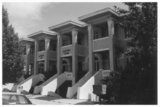
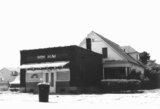
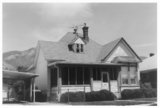
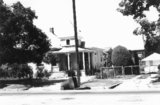
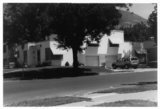
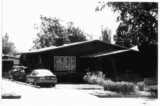
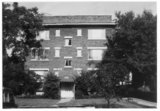
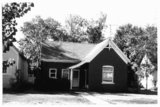
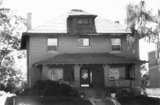
Show 0MB No. 1024-0018, NFS Form United States Department of the Interior National Park Service National Register of Historic Places Continuation Sheet Section No. 8 Page 24 Ogden Central Bench Historic District, Ogden, Weber County, UT and most magnificent mansions in the state. Mr. Peery had the home built in such great size partly in order to provide work for many men who were unemployed during the 1893 depression.71 The Peery family continued to own and occupy the home until the 1930s; they also owned over forty other properties in the city they used as rentals. While hard times continued during the 1930s, the Peerys had a difficult time collecting money from the other forty-plus rentals they had throughout the city. As the family started to accumulate debt due to the loss of income of the other properties, they were unable to pay the taxes on the Virginia House and turned it over by the late-1930s. It was soon thereafter demolished. 72 Another family to lose their home was that of Edward T. Saunders. They had moved into the district at 706 21 st Street in 1934 due to the loss of their home located a couple blocks away, on 20* Street. Although the family was doing fairly well, they had problems with a mortgage and due to the economic effects of the depression^ it was almost impossible to get anything refinanced, so they had to move.73 The Peerys and Saunders examples illustrate that families of all classes and backgrounds had difficult times in the 193 Os holding on to their properties. Community Development and Planning Despite the hard times construction did slowly continue in the district throughout the decade. Some of the more prominent builders during the era include Louis N. Meid, Alfred Stromberg, and later Samuel L. Stephens and Earl S. Paul. The building of the 1930s in the bench area was much less defined than it was during the first half of 1920s, with its emphasis on bungalows, and the second half of the 1920s, with its emphasis on historicism (period revival styles). The aforementioned builders had a unique touch with their architecture and are representative of the building during the decade. i Architecture In the late 1930s the International style started to make a presence in Ogden, particularly within the district.74 The very southeast block of the district is where several of the International style homes are found, most of which were constructed by local contractor and county planner Earl S. Paul. Some of the homes he built were unique in that they are duplexes, as is the case of the home at 2910 Brinker Avenue (Photo 47). Duplexes were extremely popular in the district, and just as the home on Brinker Avenue was a duplex, a couple hundred other multiple-dwelling units were constructed in the district using various styles popular throughout the twentieth century. Duplexes and other multi-family homes were built using the Bungalow (i.e. 2736 Brinker Avenue), English Tudor (2605 Jackson Avenue), Neoclassical (2701 Fowler Avenue), Prairie School (2438 Madison Avenue), Spanish Colonial (2564 Van Buren Avenue), and several other styles in various locations throughout the district. The three-story apartment buildings already mentioned were built to help create affordable housing in the area for those who moved here to work for industries related to the railroad; duplexes and other types of 71 Oqden Standard-Examiner. "Southern Gentleman Built Virginia House," 30 September 1979. 72 Rob King, Great-Grandson of D.H. Peery, Interview, March 2001. 73 "Ogden Fourth Ward History." 74 The concentration of International Style houses in this district is likely the highest in Utah. |