| OCR Text |
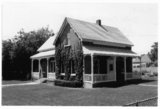
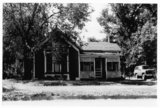
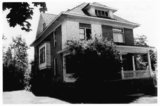
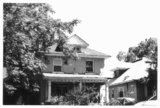
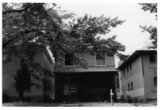
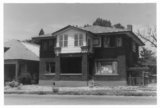
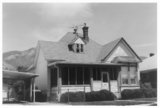
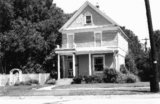
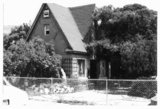
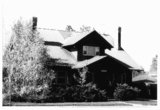
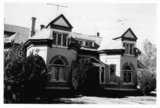
Show OMB No. 1024-0018, NPS Form United States Department of the Interior National Park Service National Register of Historic Places Continuation Sheet Section No. 8 Page 5 Ogden Central Bench Historic District, Ogden, Weber County, UT in 1881 by A.J. Kershaw. Kershaw Avenue was eventually changed to Eccles Avenue in the 1910s, after the development of the Eccles Subdivision, which lies one block south of Kershaw's. It is clear that by 1887 the Central Bench had started to establish itself as the dominant residential sector in Ogden. Located on the bench, it was a place where families could move to escape the more bustling and busy area of town west of the district. The bench area slowly became a destination for a wide variety of people, including railroad employees, merchants, laborers, and businessmen. As was noted in a publication of the University of Utah Graduate School of Architecture, "After becoming a railroad hub in the 1870s and 1880s, Ogden slowly developed something of a split personality. A schism emerged between the residential and commercial area running east from Washington Boulevard, and the western industrial district, located near the rail yard." 18 And of the Central Bench they concluded that it was an attractive sector of the city with tree-lined, middle-class neighborhoods and represented stability, refinement, and peacefulness. Indeed, this sentiment of a need for a stable and peaceful neighborhood only grew as Ogden was approaching a new, more rapidly changing turn to greater growth and development. A good percentage of the homes that were built pre-1887 in the neighborhood have been razed, with most demolished by the end of the 1920s to make room for more modern houses. 19 Also, during the early days of the Central Bench, most families initially settled on large parcels of land and built smaller adobe and wood frame houses, usually with a stable and/or a barn in the rear of the property. As many of these Ogden pioneering families grew in size by the turn of the century, so would the need to increase the size of the home. So, many demolished their original dwelling and constructed a new home on the site or kept the old dwelling for a while and built new structures on their surrounding property, sometimes building homes for their children. William G. Biddle and family, of 2447 Monroe Boulevard (Photo 5), is a good example of this process. i The Biddies, Mormon pioneers, trekked to Utah in the early 1860s and by 1870 had settled on an acre of land in Ogden, located on the 2400 block of Monroe Boulevard (Green Street). They built a small rectangular shaped wood frame home on the north end of the lot. Two decades later the Biddies demolished this home and built a more modern Victorian Queen Anne style dwelling at 2447 Monroe on the south half of the lot; after demolishing the old home and building the new, the Biddies then sold the north half of their lot. Many other residents would simply build their home in the rear of the lot and years down the road build a modern home closer to the street front. Another factor that changed the older face of the district during the building and population boom that was to come during 1888-1892, was that many families started to subdivide lots to help provide land and make profit during the boom, and their old property was systematically absorbed by Ogden's expansion. Replacement homes were very common in the district, old homes being demolished and replaced by newer homes on the original home's site. The years prior to 1888 were a time of settlement and growth for the district and helped set up what was to become one of the largest 5-year spans of growth in the district and city's history. 17 The Eccles Avenue Historic District was listed on the National Register in 1976. 18 Olsen, Building by the Railroad. 19 Ogden Standard-Examiner. "Adobe House is Yielding to Wreckers," 27 January 1926. |