| OCR Text |
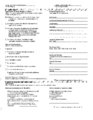
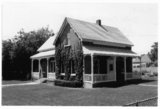
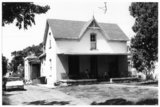
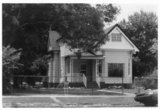
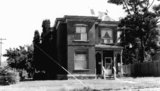
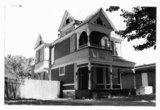
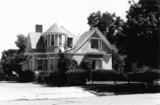
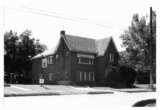
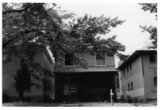
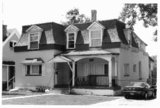
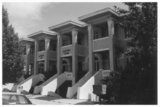
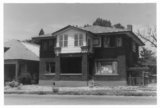
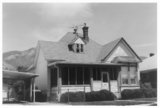
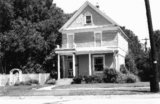
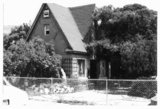
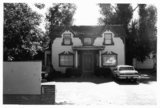
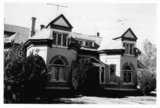
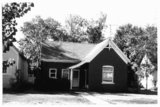
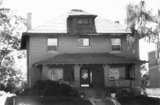
Show OMB No. 1024-0018, NPS Form United States Department of the Interior National Park Service National Register of Historic Places Continuation Sheet Section No. 8 Page 7 Ogden Central Bench Historic District, Ogden, Weber County, UT importance as a commercial and manufacturing center, the high quality of land and easiness to obtain the lands as land titles in Ogden were the most accurate he had ever seen, Ogden's geographical location in terms of its proximity to the Great Salt Lake and beautiful Wasatch Mountains, and best of all its climate. His explanation for Ogden being overlooked in the past was the fact that Salt Lake City had been synonymous to Utah, and consequently the only place people came to stay or visit.23 Mr. Nelson did have faith in the city, as can be seen by the several residences he built here, particularly in the Central Bench District. A good example is the Victorian style central block with bays home he had built at 506 23 rd Street (Photo 6), which was used throughout most of its history as a rental unit. Many others had respectable views of the city. A visitor of the city remarked, "There is no place but Ogden for me, I like the broad progressive liberal-mindedness of her citizens, I adore the sociability which is to found within her borders, and the activity which characterizes her." In light of the increasing "buzz" about Ogden, builders and contractors were looking forward to the largest building season they had experienced in years. This perception was no understatement. Numerous homes were constructed during 1888. The availability and ability to obtain products such as lumber and brick were made possible through the railroad, and labor was readily at hand as many moved to the city to work. By April of 1888 the largest brick factory west of St. Louis was located in Ogden , within the Central Bench District between Madison and Jefferson Avenues and 28* 1 and 29* Streets (demolished). Doubtless, a good percentage of the homes that are still standing in the district from this boom era were constructed using the brick of the plant.26 By the end of 1888, the foundation had been laid in order to bring in another prosperous year and the outlook in the beginning 1889 was that it was to be the best year Ogden had ever had in terms of business, growth, and building. i One of the interesting developments in 1889 was the increasing attention the city was receiving by people who lived outside of Utah. The Denver and Rio Grande Western, along with the Union Pacific, started taking investors, developers, etc. from Denver to Ogden in March of 1889. The excursions were advertised in newspapers in nearby places such as Colorado, and articles were published in the Ogden Standard to make citizens aware and urged the community to take their part in welcoming the visitors and making sure their stay was a pleasant one-to showcase Ogden in the best possible light. In fact, many Ogdenites took this to heart. When one Ogdenite was asked by an excursionist from back east what he thought of Ogden, the citizen replied, "I think it is the best city in the this part of the country and if I had $50,000 to invest, I would invest it all in this city." Needless to say, this type of response was common and made the city even more enticing. 0c To boost the city even more, in conjunction with Salt Lake City, the Chambers of Commerce gathered the lilacs that bloomed during the spring in Ogden and loaded them into a Denver and Rio Grande Western railcar; as the 23 Ibid, 29 February 1888. 24 Semi-Weekly Standard. 25 February 1888. 25 Ibid, 18 April 1888. 26 Wayne L. Balle, "Life and Times of Joseph T. Johnson, Builder," March 1993, Long Range Planning Department, Preservation Files, Ogden, Utah. |