| OCR Text |
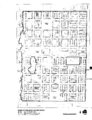
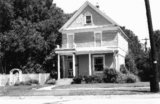
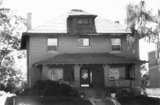
Show 0MB No. 1024-0018, NPS Form United States Department of the Interior National Park Service National Register of Historic Places Continuation Sheet Section No. 8 Page 1_ Ogden Central Bench Historic District, Ogden, Weber County, UT Narrative Statement of Significance The Central Bench Historic District is significant under both Criteria A and C. Under Criterion A, the district is significant as Ogden's largest historic residential neighborhood, with a period of historical significance dating from 1877 to 1954. The buildings reflect the transition of Ogden's residential neighborhoods as the city emerged from its agricultural beginnings to become a major center for government, commerce, education, and industry. Prominent families involved in local, state, and national affairs all made the Central Bench Historic District their home. Although the district is primarily residential in nature, it also includes an institution of higher learning, several religious facilities, and various commercial buildings. Because of the diversity of uses, historically the neighborhood was self sustaining, further differentiating it from the industrial/commercial sector of town. Under Criterion C the district is architecturally significant for the diversity and integrity of the buildings. The district contains the best concentration in the city of examples of historic styles and types that were popular both in Ogden and throughout Utah. The houses range from early vernacular Classical style to high-style Victorian architecture to more modest bungalow, period revival, and post World War II styles. The historical and architectural diversity in the neighborhood, along with the high concentration (73%) of well preserved, contributing historic buildings makes the Central Bench Historic District the most important historical neighborhood in the city of Ogden. Early Development and Structures: 1870s to 1887 Exploration and Settlement The first European-American settler of Ogden, Miles Goodyear, built a fur trading post in 1845 on an attractive spot of the Weber River, not far from where the Weber and Ogden Rivers converge. In 1847 he sold the property to Captain James Brown, a one-time leader of the Mormon Battalion. Soon after, numerous Mormon families started to migrate to the area. In 1850 Brigham Young, President of the Church of Jesus Christ of Latter Day Saints, established the basic plan for the city. More Mormon families were sent to settle the area, and in 1851 Deseret incorporated the city of Ogden, with Lorin Farr being called to serve as its first mayor. Later in 1851, Henry Sherwood surveyed the streets, blocks, and lots as planned by Brigham Young.4 An early Ogden journalist noted, "Those who planned the future of Ogden intended that the city should be a mile square; that they made the blocks to contain 10 acres, divided into 10 lots of one acre each; the blocks were 660 feet square and the streets were 99 feet wide excepting Main Street (Washington Boulevard) which was 132 feet wide; the first plat provided for 56 blocks, arranged in seven rows of eight blocks each."5 A large portion of that original plat included part of the Central Bench Historic District, the area between 21 st and 28th Streets and 4 Jalynn Olsen, Building by the Railvard: The Historic Commercial and Industrial Architecture of Ogden. Utah (University of Utah Graduate School of Architecture, 1998), 6. Also, Robert Parsons and G. Ross Peterson, Ogden City: Its Governmental Legacy. A Sesquicentennial History (Ogden: Chapelle Limited, 2001), 25-31. And, John W. Reps, Cities of the American West: A History of Frontier Urban Planning (Princeton University Press, 1979), 313-317. 5 O.A. Kennedy, Utah Manuscripts, Reel VIII-A190, Bancroft Library. |