| OCR Text |
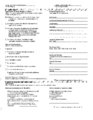
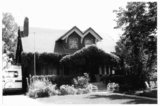
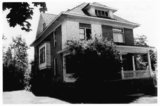
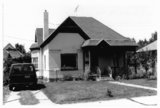
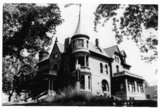
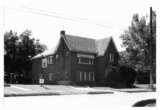
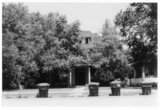
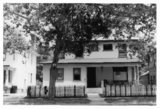
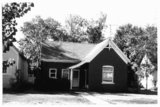
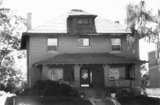
Show 0MB No. 1024-0018, NPS Form United States Department of the Interior National Park Service National Register of Historic Places Continuation Sheet Section No. 8 Page 16 Ogden Central Bench Historic District, Ogden, Weber County, UT furnishings. They stayed in operation until retiring in 1939. In addition to running the store, they were also involved with organizations such as the Women of the Woodcraft and Women's Relief Corps. The sisters were members of the Congregational Church, and often times associated themselves with the Japanese Church in Ogden. By the early-1900s an interesting development started to take place with Dutch immigrants. In the late-1800s the LDS Church had started to send a large number of missionaries to Holland. Consequently, the Dutch that had converted to the LDS Church more often than not found their way to large population centers in Utah, primarily Ogden. After making their way to Ogden many of the immigrants slowly started to migrate to the area of 21 st Street and Gramercy Avenue. By the early-1900s the majority of Dutch families living in Ogden resided in that vicinity. Well over one-dozen families lived within approximately five blocks of one another, likely the largest cluster of LDS Dutch immigrants in the country at the time. Many of the original homes still exist in the area, an important remnant of LDS Dutch history. As time passed on, however, the Dutch started to live largely throughout the entire city and in other places such as Salt Lake City. 55 Nonetheless, by the end of World War I, the Central Bench in Ogden was unequivocally one of the most attractive residential neighborhoods in the state (more of the same continued after the war and throughout the 1920s as well). A newspaper article in the "Industrial Review" section of a 1917 edition of the Ogden Standard highlighted five of the homes found in the Central Bench District on its front page, proclaiming, "Ogden an Ideal Home City-Many Beautiful Structures."56 By time the 1920s arrived, many in Ogden, particularly those living in the district were doing well and having much success. The district, with its numerous and large variety of homes, solidified itself as the place to live in the "Junction City." Architecture The architecture seen during the very early 1900s was reminiscent of the design during the 1890s, particularly the Victorian element. Homes built now were generally more utilitarian. In contrast to the homes built of wood a decade prior, homes in the early 1900s were almost always made of brick. Although many homes were made of brick in the early 1890s, its use became more ubiquitous in the new century. A good example of the architecture in 1900 can be found at the James G. Paine House at 2103 Adams Avenue. It is a one-story brick Victorian cottage using very little decorative detail, and has a basic rectangular floor plan with a small bay on the north side. Within a few years the outlook in Ogden, and particularly the bench area, looked even brighter in terms of building. In 1904, a time when new businesses and shops opened up in Ogden to cater to the railroad, several realtors gave their views of the upcoming building season. Some of the remarks were as follows, "The building of houses will increase until houses get to be more numerous, the contractors will have more work than they can 55 Davis Bitton and Gordon Irving, "The Continental Inheritance," The Peoples of Utah (Salt Lake City: Utah State Historical Society, 1976), ed. Helen Zeese Papanikolas. Also see William Mulder, "Hollander Immigrants to Utah," Utah History Encyclopedia (Salt Lake City: University of Utah Press, 1997), ed. Alien Kent Powell. 56Oqden Standard. "Ogden an Ideal Home City, Many Beautiful Structures," 9 February 1917. |