| OCR Text |
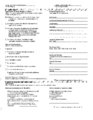
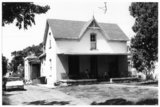
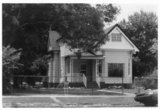
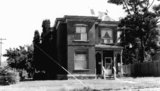
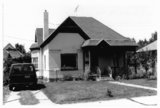
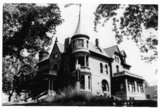
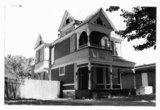
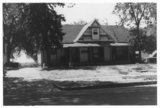
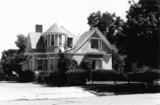
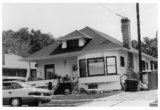
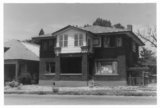
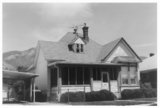
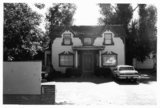
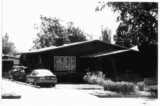
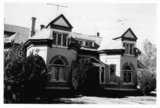
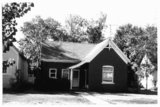
Show OMB No. 1024-0018, NPS Form United States Department of the Interior National Park Service National Register of Historic Places Continuation Sheet Section No. 8 Page 4 Ogden Central Bench Historic District, Ogden, Weber County, UT According to Olivia Gay, J.F. Gay's daughter, the home was the first residential structure in the city to be built and designed by an architect. In fact, the 1880s is when Ogden first started to witness a number of buildings being erected by architects. Architecture Early Architects/Builders William W. Fife is the most noted early professional architect in Ogden; prior to this era in Ogden and Utah in general the housing design at the local level was usually the responsibility of the person in the building trade. 14 As an architect Mr. Fife designed several early structures in the district, as was the case with the Gay House. Mr. Fife was born in Ogden in 1856. His father, William Nicol Fife, was a well-known builder and contractor from whom W.W. Fife received his training at a very young age. While just a teenager, W.W. Fife helped run his father's business. And although W.W. Fife died in his fortieth year, his accomplishments in the building of the city were second to none. 15 Mr. Fife also resided in the district at 2122 Adams Avenue (Photo 4), building the Vernacular-Classical style hall-parlor family home c. 1885. In addition to William N. and William W. Fife, some other early builders in the district include D.D. Jones, who was also listed as an architect in the late 1880s. Henry Mortensen, who resided and ran the family business M.F. Mortenson and Sons in the district, lived just above Madison Avenue on 23 rd Street. Nils C. Flygare, who was a contractor, resided in the district on 24th Street just above Monroe Boulevard. To supply the aforementioned builders and other early settlers in constructing their homes, several industries were established. Ogden's first Mayor, Lorin Farr, was instructed by Brigham Young to build a sawmill and gristmill, which were established as early as 1851 to aid the Ogden pioneers. Ogden Canyon was the early settler's favorite location to collect timber for construction of their homes. A sawmill was later placed in the canyon, and other mills were also placed elsewhere throughout the city. Adobe supplemented lumber in Ogden's early years. A large adobe "hole," where adobe was made, could be found lying east of the cemetery and just across from the northern boundary of the Central Bench District; undoubtedly this is the location where several of the early home's material in the district were made. Other industries related to building during the 1850s-1880s were also established, such as stone quarries, limekilns, brick kilns, carpentry, plumbing, painting, and tinsmithing. The materials needed for home building was made possible for early builders, by the early Ogden settlers, and everything could be found within the city; and by the late-1880s materials became even more available due to the advent of the railroad in Ogden City. Subdivisions Another new development in the 1880s in Ogden was that of subdivisions. As will be seen the proliferation of subdivisions occurred greatly in the very late-1880s, however, Ogden's first subdivision-Kershaw's, was platted 14 Peter L. Goss, "The Architectural Profession in Utah," Utah History Encyclopedia (Univesity of Utah Press, 1994). 15 W.W. Fife, Architect File, Long Range Planning Department, Preservation Files, Ogden, Utah. 16 DUP, Beneath Ben Lomond, 355-368. |