| OCR Text |
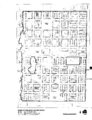
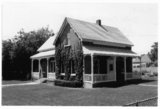
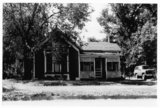
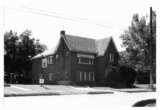
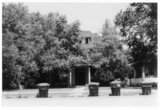
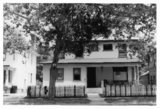
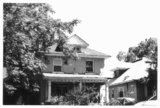
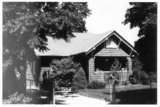
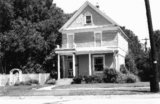
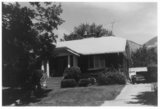
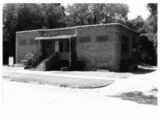
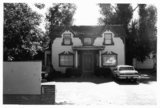
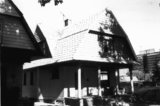
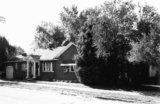
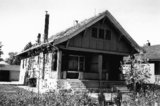
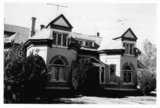
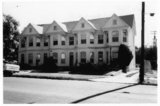
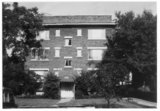
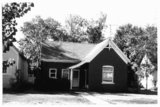
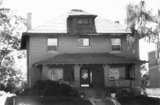
Show OMB No. 1024-0018, NPS Form United States Department of the Interior National Park Service National Register of Historic Places Continuation Sheet Section No. 7 Page 7 Ogden Central Bench Historic District, Ogden, Weber County, UT rectangular floor plans, low-pitched roofs, and are adorned with a small front porch. Other examples of bungalows in the district include those with steep pitched roofs with large eaves, many are done in shingle siding and/or wood banding, some have projecting bays on the main floor, and many have minor ornamentation such as stained-glass and casement windows or exposed rafters and beams. Indeed, the term bungalow is a catchall term that describes these more economical, informal, and open style homes that blanket a large portion of the Central Bench District. Following and occasionally occurring simultaneously with the largely popular bungalow era in Ogden was the movement towards Period Revivalism. By far the most common contributing Period Revival home in the district is the English Tudor/English Cottage with 75 contributing examples (Photo 10), followed by the Colonial Revival with 25 (Photo 56). Other Period Revivals found throughout the district in smaller numbers include Neoclassical (Photo 57), Spanish Colonial Revival (Photo 58), Mission (Photo 59), and French Norman (Photo 44). The International and Art Moderne styles were mildly popular, with a total of 20 contributing homes in the district. Although these modern styles were not largely popular in all of Utah, one of the largest concentrations of them in the state can be found at the southeast portion of Ogden's Central Bench Historic District. Examples of these modern styles include the International style Paul Duplex at 2910 Brinker Avenue (Photo 47) and the Art Moderne style Blair Apartments at 541 23 rd Street (Photo 48). Two other modern styles can also be found in the district, including the Art Deco United States Forest Service building at 505 25th Street (Photo 50) and the PWA Moderne former Weber College Mechanic Arts Building at 2450 Adams Avenue (Photo 49). World War II had a great impact on Ogden and its building construction. A large number of homes were built in the Ogden vicinity throughout the 1940s to help house the workers of the newly established defense industry. The Central Bench Historic District is a good example of this phenomenon. All land in the district that was still available in the 1940s (which was not a very large portion) was finally completely used up to build homes for defense workers. As a result approximately 300 World War II-era cottages in the Minimal Traditional style were constructed; 259 of those still retain their architectural integrity. A good number of the homes, which were generally smaller dwellings done in brick or aluminum siding, can be found concentrated in the northeast corner of the district (Photo 54). Architectural Types by Popularity Bungalows Just as a large mixture of styles composes the Ogden Central Bench Historic District, a large variety of architectural types can be found within its boundaries. The bungalow, as it is both a type and style of building, is by far the most common. Three main bungalow types are found in the district, as was briefly mentioned above. First, one has its narrow end placed toward the street and may have either a low-pitched hipped roof or roof that is detailed in the Arts and Crafts vein (Photo 60). The second is a one-and-a-half-story house with a |