| OCR Text |
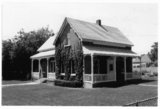
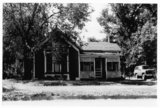
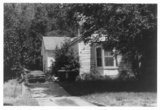
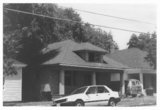
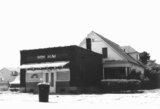
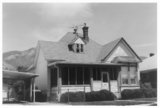
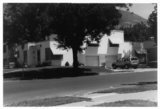
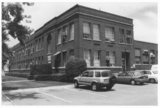
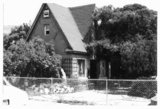
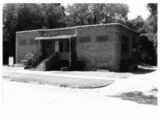
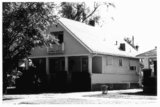
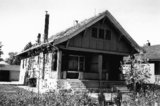
Show OMB No. 1024-0018, NFS Form United States Department of the Interior National Park Service National Register of Historic Places Continuation Sheet Section No. 8 Page 20 Ogden Central Bench Historic District, Ogden, Weber County, UT Monroe Boulevard and Quincy Avenue, was known as Ballantyne Avenue due to the building and homes owned by the family in the vicinity. 62 Community Development and Planning Public Services in the District Important to the development of the district, especially during this era, was public utilities. By 1914 the water system of Ogden was fully operational in the district. The city exploited the underground waters of Ogden, as opposed to the rivers and streams flowing from the mountains to the east, as artesian wells were used for the first time within in Ogden, within the district. Ogden's electric light system was inaugurated through the lighting of an electric light tower in the center of the city in the early 1880s. The steel tower was located on the western boundary of the district, on 24th and Adams Avenue. Following that a hydroelectric plant was established near Ogden Canyon. By the early 1900s these facilities were taken over by the Utah Power and Light Company, a major Utah power utility that served Ogden for many years. The telegraph and telephone also played an important role in the early history of utilities in the district, and natural gas would also become a major factor in many homes in the following decade.63 Equally important to the developments previously mentioned, is that of the streetcar system. As the district had grown throughout the late 1800s and into the 1900s, transportation to the commercial and industrial sector of town became an important issue. Street railroads started in 1883 with a mule-powered rail line, and by the turnof-the-century prominent businessmen Thomas Dee and David Eccles created the Ogden Electric Railway Company, which continued to grow and expand over the next couple decades making an impact in the district and influencing development. Rail lines served the Central Bench District until the early-1930s, when they started to be replaced by gasoline buses. The last tracks of the old rail lines were taken out in the early-1940s. Commercial Development Due to the growing development in the bench neighborhood, and as people started to live more and more in the eastern part of the district farther away from town, local grocers and meat markets started to rise up in the area to cater the community. Several started to be built in the 1910s, including the Sawyer Bros. Grocery at 1012 22nd Street, c. 1912; Farnsworth Grocery at 2162 Monroe Boulevard, c. 1914; and the Mollerup Grocer at 2669 Jackson Avenue, c. 1915. Some precursors were the Kasius Grocery at 743 23 rd Street, c. 1905 (Photo 40); and the Poulter Grocery and Dry Goods Store at 2570 Gramercy Avenue, c. 1893 (Photo 41). The Kasius Store was built in 1905, a small commercial block constructed in front of Andrew Kasius's home. Mr. Kasius, a Holland native, moved to Ogden, with his family, during the boom years to run an umbrella market on Washington Boulevard. In the early 1900s he then moved to the Central Bench District, where he then opened up the grocery store. Mr. Kasius is a good example of a common story in Ogden and the Central Bench District. As many newcomers made their way to Ogden they usually stayed in the industrial/commercial sector of town west 62 Delecta B. Burton, "History of Caroline A.S. Ballantyne, Utah Pioneer of 1855," Family History Library, Ogden, Utah. 63 Dale L Morgan, A History of Oqden (Ogden, UT: J.O. Woody Printing Company, 1940), 57-58. 64 William W. Terry, Weber County is Worth Knowing (Ogden, UT: W. Terry, 1989), 287-291. |