| OCR Text |
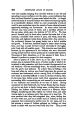
Show 406 APPENDIX E.- GEOLOGY. the carboniferous limestone. Judging from the relative position of the limestone, and the metamorphic rocks of Antelope and Fremont's Islands, the former occupies the position of low, synclinal basins, the valleys between being produced to a large extent, probably by erosion along the anticlinal axes, produced by the elevation of the metamorphic beds. We may expect, also, that the same limestone will be found on the elevated plateaus and mountains on the east side of the lake. It will be seen from these facts that we have very satisfactory information that this limestone of the carboniferous period is widely distributed in the region around the Great Salt Lake. Its position relative to the coal- bed on the North Fork of Platte River has not been determined; but since no beds of coal have been observed on the slopes of the mountains in the region of the Salt Lake, we are left to infer that the coal is to be sought ( as elsewhere) above the limestone. Since the existence of coal is proved in one point, ( admitting the evidence in favour of its age being that of the carboniferous period,) we are warranted in the conclusion that it has once existed over a much wider area, and can be sought with success in the proper situations. The importance of this mineral in that distant region cannot be too highly estimated, and the geographical position and extent of the beds should be one of the first points ascertained in the location of any route of communication between the east and the west. In comparing the notes and specimens with the map of your route and the large map of the Salt Lake and adjacent country, I have confined myself to indicating by a colour the kind of rock occurring at each point, scarcely in any case extending this colouring even when the topographical features of the country would warrant the conclusion that the same rock existed. Your knowledge of the character of the surface and the relative elevations will enable you in many instances to determine the limits of those formations marked; while, for myself, not fully understanding their features, I might fall into some error. Hoping to see the investigations you have so well begun carried still further, until we can have a good geographical and geological map of this region, I remain, Very truly and respectfully, Your ob't. serv't. JAMES HALL. |