| OCR Text |
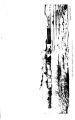
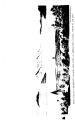
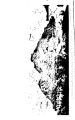
Show 160 FREMONT ISLAND. adventurous explorer of this distant region to name it after him who first set foot upon its shores, and have therefore called it FrSmont Island. While putting up the station here, search was made for the cover to the object end of his telescope, which he states he had left on the summit of the island, but it could not be found, having probably been buried in the detritus of the rapidly decomposing rock upon which it had been left. The island is fourteen miles in circumference, has neither timber nor water upon it, but its sides are covered with luxuriant grass, and abound in prodigious quantities of the wild onion, wild parsnip, and sego, ( Calochortus luteus.) The latter is a small bulbous root, about the size of a walnut, very palatable and nutritious, and is much used by the Indian tribes as an article of food. It abounds on hillsides and in stony ground in great quantities. Near the summit of the island, the sage ( Sarcobatus vermiculartSy nees,) grew in great profusion, and to an extraordinary size, being frequently eight feet high and six or eight inches in diameter. Gould fresh water be obtained by boring, ( and it is worth the experiment,) a more admirable range than this for sheep and goats could not be desired. Being surrounded by deep water, the protection from wild beasts is absolute; an object in this country of no small importance, where wolves abound in great numbers. The wild parsnip is already up several inches, and its vivid green presents a cheerful contrast on the sunny slopes with the snow- clad mountains which surround us. A single ground-squirrel was seen; but how he got here, and where he obtained water to sustain life, is somewhat of a mystery. In all our subsequent examinations not the least indication of a spring was discovered. Our men picked up quite a number of the eggs of the blue heron, now just beginning to lay, in the tall grass along the shore. In approaching the island from the water, it presented the appearance of regular beaches, bounded by what seemed to have been well- defined and perfectly horizontal water- lines, at different heights above each other, as if the water had settled at intervals to a lower level, leaving the marks of its former elevation distinctly traced upon the hillside. This continued nearly to the summit, and was most apparent on the north- eastern side of the island. On our return to camp, we spread our sails merrily to the breeze, and although our boat was heavy and by no means a clipper, yet |