| OCR Text |
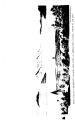
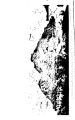
Show WESTERN BASE OP PROMONTORY RANGE. 103 tirely disappeared, and the water, although apparently shallow, came nearly up to the base of the hills. Near the margin of the lake it is not safe in all places for animals to pass, as the almost constant exudations of salt water from the edge of the grass, undermine the surface, rendering the narrow intervening beach treacherous and miry. The water to the westward appears bold and deep; and enough has been seen to convince me that a large sail- boat will be absolutely indispensable in the contemplated survey, for the supply of the different parties with provisions and water. Wood there is none. Fuel for cooking, can, however, be generally obtained from the artemisia which abounds almost everywhere ; but timber for the construction of the triangulation stations, will, in most instances, have to be transported by water, or hauled down from the cafions of the mountains. The rocks observed were porphyry, gneiss, dark slaty shales, and metamorphic sandstone, dipping to the north- east. After proceeding some miles to the north, dark limestones with white marble veins occurred, alternating with clayey shales. The rocks on this side of the promontory are much more rugged than on the other, or eastern slope, presenting numerous lofty escarpments where they crop out, the dip being to the east. A cactus, with very long prickles, was observed near our morning camp; and at the spring where we nooned, a small jointed cane trailed on the ground, in some instances to a distance of more than thirty feet. The men made excellent pipe- stems of this material. The spring where we encamped for the night was an oval hole or pit, with perpendicular sides, about fifteen feet long, six broad, and four deep. The water was tolerably good: a small spring, rising at the base of the hill, ran into the lake close by. These springs afterward afforded us nearly all the water used upon the survey of the west shore of the lake; but a voyage of fifty miles was frequently necessary to obtain a supply even for a few days. Wednesday, October 24.- Clear and calm. Ther. at daylight, 19°; sunrise, 24°. Continuing our journey up the lake- shore, we shortly came to a brackish spring, where there had been a camp of Indians the night before. We had thought last night that we saw their fires, but they had fled, alarmed probably by the report of some guns that had been discharged in our camp. A quantity of some species of seeds they had been beating out lay in small heaps around, and I found an old water- bottle they had left in their haste. It was ingeniously woven of a sort of sedge- grass, coated inside |