| OCR Text |
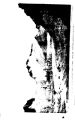
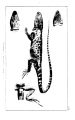
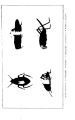
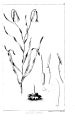
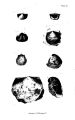
Show 338 APPENDIX C.- REPTILES. of grayish yellow spread all over the body, head, and tail, reminding us of surfaces over which lichens grow, whence the specific name by which we designate this species. It was caught by R. H. Kern, Esq., in Spring Lake, at the head of Santa ¥ 6 Creek, in New Mexico, accordingly a member of the fauna of the basin of the Rio Grande del Norte. In a revision of the North American Tailed Batrachia, published in the Journal of the Academy of Natural Sciences, 2d series, vol. i., p. 281, ( 1849,) we intimated a doubt as to whether Siredon or the axolotls were adult animals. Their wonderful resemblance to the larvae of Ambystoma punctata was our chief ground for this belief. Since then, however, we have seen the description and figures by Sir Everard Home of S. mezicanus, in which he clearly indicates, in one individual at least, ovaries distended with eggs. We have also seen specimens with the genital apparatus presenting the tumid and highly developed appearance of salamanders in general, when in the breeding season. CNEMIDOPHORUS TIGRIS, Baird and Girard. Pi. II. SPEC. CHAB.- Scales on the subguttural fold small in size; four yellowish, indistinct stripes along the dorsal region. This species, one of the most elegant of its genus, is the third hitherto described as found in the United States, for we have no doubt that the lizard referred to in Long's expedition, under the name of Ameiva tesselata, will come under this genus, and be closely allied to our species. No specimen of this being extant at the present time in any known collection, a direct comparison with the other species of Cnemidophorus was not possible. That" A. tesselata, however, although closely allied to, is not identical with our species, we think that any one will be convinced on comparing Say's description with the figures in pi. II. These are of natural size, and exhibit most admirably the structure of the regions in their most minute details. The plates of the head above ( fig. 3), below ( fig. 2), and on the sides ( fig. 1), need no further description. The minute scales of the back and upper portion of the legs contrast strikingly with the eight rows of large scales of the belly and those of the lower part of the hind legs, as well as with those of the inferior surface of the head and throat. On the tail again, the scales assume another character, well opposed too; they are longer than |