| OCR Text |
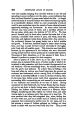
Show APPENDIX E.- GEOLOGY. 405 corresponding to that of the elevating force, appears to be nearly in the direction of north by west and south by east. From the form of the lake and the different localities at which rocks of this character occur, we may infer that there were two lines of elevation, corresponding with the divisions of the lake. The more elevated portions of the lake shore, and the mountain ranges, consist of carboniferous limestone. In some localities this limestone is partially altered, losing its granular character and becoming sub- crystalline, or threaded by numerous veins of calcareous spar. In most localities, however, the limestone abounds with fossils, particularly corals of the cyathophyllidese. From the records in the journal of observation and from specimens, I have been able to indicate several localities of importance. The principal of these is Stansbury's Island, the summit of which is of limestone, and has an elevation of three thousand feet. The limestone is said to rest on coarse sandstone and conglomerate, specimens of which accompany the limestone. Limestone also occurs on the mountains of the Spring Valley rang6, to the southwest of the lake. Stansbury's Island, from its position at the southern extremity of the lake, and from its isolated and elevated character, has been more fully exposed than the localities on the west side. Along the western shore, southward of Strong's Enob, the same limestone waft examined and noted in three places, and in two it is marked as underlaid by sandstone. Limestone also occurs at Strong's Enob with the altered rocks. West of the knob, another point is indicated as limestone; and northward of this, Gunnison's Island is of the same rock. Dolphin Island, and also a considerable space on the shore west of this island, are indicated as limestone, both from specimens and the journal. On the eastern shore, opposite Dolphin Island, limestone occurs in close proximity to metamor-phic strata. It should not be omitted that the same limestone occurs to the north of Great Salt Lake City, and is quarried in that neighbourhood. It appears both from the specimens and the notes of observation that the limestone overlies a coarse sandstone, or conglomerate, which almost invariably accompanies it. Although I have not felt at liberty to colour on the map any other points than those indicated both by the notes and by specimens examined, yet I can have no doubt but all the elevated ranges on the west, south, and north of the Great Salt Lake are capped by |