| OCR Text |
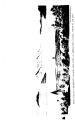
Show FORT LARAMIE. 58 arrangements for continuing our journey. I here unpacked one of the barometers which I had taken charge of for the Smithsonian Institution, to be left at this post. It had stood the journey admirably, was in perfect order, and was gladly received by Lieutenant Woodbury, of the corps of Engineers. Observations also were made for the latitude of the post, which placed it in lat. 42°. 12' 88." 2, Jong. 104° 81' 26". Fort Laramie, formerly known as Fort John, was one of the posts established by the American Fur Company for the protection of their trade. Its walls are built in the usual style of such structures, of adobe or unburnt brick. The company sold it to the United States Government; and their people, when we arrived, were temporarily encamped near the ford of the creek, having recently surrendered the possession of the post to the troops, whom we found engaged in preparing for its extension and in the erection of additional quarters, under the superintendence of Lieutenant Woodbury. It is garrisoned at present by two companies of Infantry and one of Mounted Rifles, under command of Major Sanderson, of the latter corps, by whom we were received with the greatest courtesy, and promptly furnished with such supplies as were within the resources of his command. I procured here fifteen additional mules, and our stock now consisted of fifty- six mules, five horses, four steers for beef, and two milch- cows, one of which we had found on the prairie, abandoned or lost by her owners. The country has risen considerably since leaving Scott's Bluff, and the general flora indicates a much drier atmosphere: the grasses especially are brown and burned up wherever the earth is not directly moistened by proximity to some stream. The soil around Fort Laramie appears to be sterile, owing no doubt to the extreme dryness of the air and the almost total absence of dews. The great quantity of coarse conglomerate, too, which, by its disintegration, leaves the surface covered with gravel, must operate as a great impediment to cultivation. The rocks, however, contain the elements of fertility, being composed of limestone, clay, and sand; and I have no doubt that, with the aid of irrigation, the bottom lands of Laramie Greek might be made to produce most abundant crops. Hay is cut about eight miles up the stream in quantity sufficient for the wants of the garrison. A short excursion of some seven miles up the Laramie river, showed that the sections of the bluffs presented strata of sand- Btone conglomerate, formed, in some cases, of the detritus of sand- |