| OCR Text |
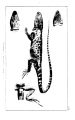
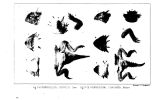
Show APPENDIX C.- REPTILES. 357 Phr. orbicular c, we have been led to the belief that the species described under that name is neither the Phr. orbiculare of Wiegmann, nor any of the other just mentioned, and indicates a species the characters of which cannot be properly defined, since the original specimens were not preserved. The species is said to occur in Arkansas, Louisiana, and Texas, that is, within the geographical range oiPhr. cornutum. Nowit is remarkable that among the numerous phrynosomas which have been received from these regions, all of them were found to belong to Phr. cornutum; unless the species be very rare, this circumstance cannot well be accounted for. Phr. orbiculare is exclusively Mexican, and Phr. cornutum North American. If any other species be found with Phr. cornutum within the limits ascribed in the United States to Phr. orbiculare by the author of the North American Herpetology, we do not hesitate in pronouncing it distinct from Phr. orbiculare of Wiegmann. Dr. Wiegmann has indicated another species of the genus Phry-noso77iay under the name of Phr. bufonium, and Surinam was first given as its home. But in his " Herpetologia Mexicana," he is in doubt as to the locality whence that species comes. Phr. bufonium is identified with Phr. cornutum by John Edward Gray in the catalogue of the British Museum. If Phr. bufonium be an inhabitant of South America, we doubt the correctness of this identification. In the absence of authentic data in reference to Phr. bufonium, we would lay that species aside, and come back to the six ones the characters of which are well ascertained, and five of them represented with great skill on the accompanying plates. The diflferent views of the head of these species have been made in similar attitudes in order to facilitate the comparisons. A glance at plate VIII, will show at once the specific differences between Phr. cornutum ( fig. 1- 6) and Phr. coronatum ( fig. 7- 12). The profile, the position of the eyes and nostrils, the polygonal plates of the head, the direction of the spines, need scarcely to be alluded to, to render the differences apparent. The scales of the inferior surface of the head ( fig. 8 and 9) exhibit a still more striking difference of form and arrangement in the two species. The femoral pores in Phr. cornutum ( fig. 6) are but little conspicuous ; they are much more so in Phr. coronatum ( fig. 12), although the figure does not represent them as such. The only specimen on hand at the time at which this figure was made being in a dried state, the fleshy parts had shrunk and the femoral pores were thus |