| OCR Text |
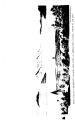
Show NOBTH END OP THE LAKE- INLAND SEA. 105 eight miles to the southward, the fiat extending in that direction to the water's edge. Two of these streams ( all of which were salt) we crossed without much difficulty; but the third, on the western side of the flat, was impassable, and we had to ascend it for three miles before we could obtain a crossing. On the west side of this latter branch comes in a small tributary, in the bed of which, near its source, a beautiful spring, ten feet wide, bubbles up from the bottom, with a column of water rising in its centre six inches in diameter. The water was clear as crystal, but salt and sulphurous, which latter quality might account for the numerous tracks of the antelope around its margin, as that animal is known to delight in waters of this character. This extensive flat appears to have formed, at one tune, the northern portion of the lake, for it is now but slightly above its present level. Upon the slope of a ridge connected with this plain, thirteen distinct successive benches, or water- marks, were counted, which had evidently, at one time, been washed by the lake, and must have been the result of its action continued for some time at each leveL The highest of these is now about two hundred feet above the valley, which has itself been left by the lake, owing probably to gradual elevation occasioned by subterraneous causes. If this supposition be correct, and all appearances conspire to support it, there must have been here at some former period a vast inland sea, extending for hundreds of miles; and the isolated mountains which mm tower from the flats, forming its western and south- western shores, were doubtless huge islands, similar to those which now rise from the diminished waters of the lake. In passing over this mud- plain, the glare from the oozy substance of which it is composed was extremely painful to the eyes. Leaving it behind us, we ascended a ridge to the west of it, two or three miles broad, passing over some remains of shales and altered limestone with conglomerate, the crest being composed of porous trap, underlying the sedementary rocks, and cropping out to the west. It may be remarked here, that the general direction of all the ridges noticed in this region is north and south, and they terminate most frequently in sharp, bold promontories, to the south. A herd of antelope was seen on this ridge, numbering about b hundred, but too wild to be approached. Descending its western slope, we came into another plain, somewhat similar to the last in form, but much more extensive in all directions, and densely covered with artemisia. Over this desolate. |