| OCR Text |
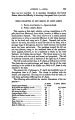
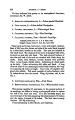
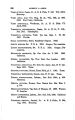
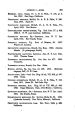
Show • APPENDIX B.- GEOLOGY. 403 posite of older date than the tertiary were observed.^ Of the specimens collected there, is but a single individual indicating the character of a marine formation. From the condition of the bones it may even be questioned whether the deposite containing them is not of post tertiary age. ** ii^ The specimens from the vicinity of Fort Laramie are all from limestone of the carboniferous period. Some of the fossils are identical with species collected between the Missouri and the Big Blue, and we can only suppose, from the great similarity of the specimens, that it is a continuation of the same formation. From the dates marked upon the specimens, it is evident that this limestone extends to some disfynce on the east and west of Fort Laramie. The specimens bearing date of July 19th, two days' march northwest of Fort Laramie, are a feldspathic granite with little quartz or mica. The rocks in this locality are doubtless of me-tamorphic origin, probably rocks of silurian age. The specimens collected three days' march in advance of this place, on the North Fork of the Platte River, are shaly sandstone and thinly laminated sandstones containing fossils. The fossils are some brachiopods, . with others similar to Monotis, and we may presume from the described position of the be4s, and from the character of the fossils, that these beds are of devonian age. In the journal these beds are recorded as dipping at the rate of 15° to the north- east. . The specimens bearing the mark of July 24th, are precisely like those collected at Fort Laramie, and contain the same species of fossils. On the same date were seen ( according to the journal) gray and red sandstones. On the following day is recorded a bed of co/ kl, three or four feet thick, with Sigillaria and Calamites. The specimens of this date sent to me are those of bituminous coal and others of soft shale, but I have been unable to distinguish any well- marked vegetable remains. From the proximity of limestone of the age of the coal, and the record of sigillaria and calamites occurring in the same connection, it may be presumed that this coal belongs to the true coal measures; and this locality is probably an exposure indicating the existence of a great basin. This point itself and the surrounding country are well worthy of a more extended examination, since the discover^ of workable beds of coal in this region would be a matter of national importance. The record of July 27th shows the occurrence of red shales and L |