| OCR Text |
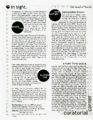
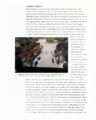
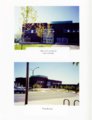
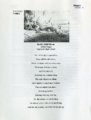
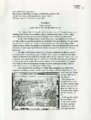
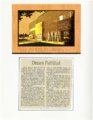
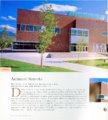
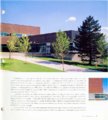
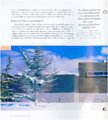
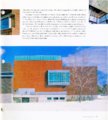
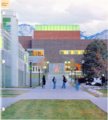
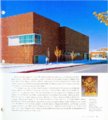
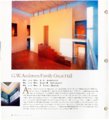
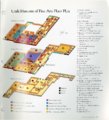
Show With all tlus 111 nund, the project evolved 111to a cont111uous succession of stepp111g pnsmatic volumes that wrap around as they ascend and culmmate 111 the tall central space. Tlus orgarnzation creates a sp1ral-like "crescendo" of discrete volumes, each one associated with specific and dist111ct programmatic elements. Thus the lowest corresponds to the auditonum, the next to the entrance and public services (such as the restaurant and bookstore) followed by art education, permanent gallenes, etc. These ternunate 111 the Great Hall, an icon aga111st the dramatic natural sett111g, wluch donunates the ensemble and is crowned by a "halo" of green glass that marks it by rnght and day from the 111side and outside as the build111g's centerpiece. To re111force tlus strategy each of the volumes is dist111gmshed from the others by a dist111ct and subtle combma- 1!11 iii I tion of two different colors ofbnck, creatmg a urnque pattern for each volume. This results 111 a gradation of five different tones for the five volumes - from darkest (for the auditonum) to lightest (for the Great Hall) Large protrudmg wmdow volumes mset at the outer corners mtensify the thrust of these volumes' centnpetal and upward movement. From all sides and perspectives, the Museum appears as a command111g, dynanuc and abstract composit10n of articulated volumes, colors, and light. Inside, the visitor is also drawn mto tlus dynanuc play of volumes and light by the tension developed between the easy, straightforward, and well-scaled c1rculation system that follows the orgarnzatlon of the gallenes, and the Great I I\ ' A UGl! R A L R E P O RT 5 |