| OCR Text |
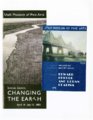
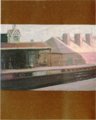
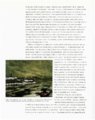
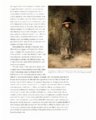
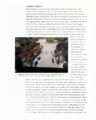
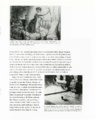
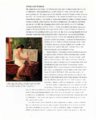
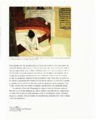
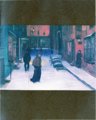
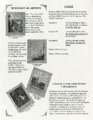
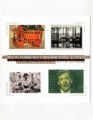
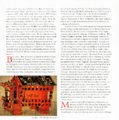
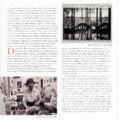
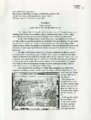
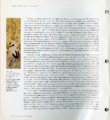
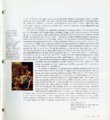
Show STYLE AND THEMES The artists in Edward Hopper and Urban Realism take their inspiration from the city and its inhabitants, often highlighting a specific feature or event over a broader, n1.ore encompassing view By imparting the idea that life was full of themes worthy of artistic endeavor, and that art had a responsibility to the society for which it was being created, Robert Henri outlined a new mode of realism that artistically defined modern America. Inspired by Henri, artists explored the diverse components that made the city boom and pulsate with life: the changing urban architecture and the rise of its buildings portrayed in John Storrs s Forms in Space c. 1924); the multifarious, largely immigrant populace that teemed with new energy and ambition as seen in Glenn O Coleman s etchings and the painting Minetta Lane, Night (n.d., fig. 9); the growing disparity between economic classes depicted in Reginald Marsh s Death Avenue 1927) and Franz Kline's New York Tenements c. 1942); the expanding entertainment industry and popular pastimes recounted in Kenneth Hayes Miller's Box Party 1936) and Parade, Washington Square 1912 by William Glackens; and new definitions of gender roles seen in Raphael Sayer's Office Girls 1936) that were reinforced by popular culture and advertising. Edward Hopper's compositional style and formal approach are quite distinct from that of his contemporaries, despite their common subject matter and themes. In earlier work such as BiackweII's Island 1911 and The EI Station 1908, fig. 1 one can see Hopper's strong sense of composition with strict attentiveness to the architecture of the setting, and his de-emphasis of the human presence and its interaction with the viewer. In comparison, a work such as John Sloan s Sixth Avenue Elevated at Third Street 1928 presents a warm and more enthusiastic portrayal of humanity that relegates the subway to the background of the scene. Reginald Marsh goes one step further, and locates The EI c. 1928 inside the train 7 John Sloan, Kitchen and Bath, 1912. Oil on composition board, 24 x 20 in. (61 x 50.8 cm). Whitney Museum of American Art, New York; gift of Mr. and Mrs. Albert Hackett 60.44 car to focus directly on the commuters and their daily journey In The EI Station, Hopper places his main emphasis on the components of the station, such as the angularity of its build- ings and the span of the train track. The light gets brighter from one side of the work to the other, accentuating a lateral sense of movement across the train track while emphasizing its emptiness. The waiting passengers on the platform, however, are auxiliary elements in the scene-seemingly included to accentuate the longing for a train that has not yet arrived. The urban realists were criticized for their exploration of subject matter considered low or controversial, and Hopper also engaged in taking liberties with the female body that were considered socially and artistically unacceptable. Hopper's Summer Inte1ior (1909; fig. 8) depicts a faceless woman naked from the waist down, sprawled at the side • |