| OCR Text |
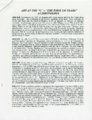
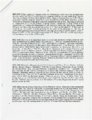
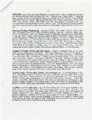
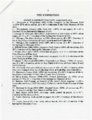
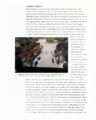
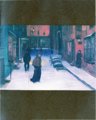
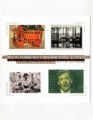
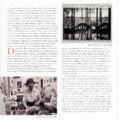
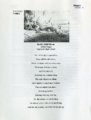
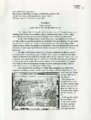
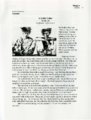
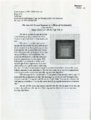
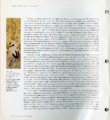
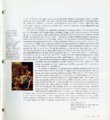
Show At the turn of the twentieth century America was changed forever by an industrial and technological renaissance. Cities were the most visible benefactors of this transformation, as they grew and thrived on the strength of modern advances such as the skyscraper, automobile, mass transit (made possible by the streetcar), and most importantly the increasing reliability of electricity which brought new awareness and vitality to the urban night. In addition, city populations pulsed with a new wave of European immigrants and an influx of settlers from rural America, all seeking to better their lives and find their fortunes . In contrast to the societal changes that roiled America in its burgeoning modernity the art at the time was traditional in theme and execution, idealistic landscapes, didactic scenes of allegory and morality and portraiture typified the established modes of expression. Art was expected to embody the refined, classical standards of the past and to express harmony and purity in an attempt to both exalt and instruct the viewer. This standard began to change with the appointment of Thomas Eakins to a teaching position at the Pennsylvania Academy of Fine Arts, Philadelphia, in 1879. Eakins, reviled by the popular press for his explicit renderings of human anatomy and medical surgery advocated new and radical concepts in his drawing classes. He believed that the only way to understand the human figure was through a direct and unobstructed study of its structure and composition. Eakins, who introduced nude models into his classes, encouraged students to learn from actual examples of the human body rather than render depictions of conventional ideals copied from classical statuary or busts. This idea was in direct opposition to the modest Victorian attitude of the times wherein women were rarely seen in public in apparel that revealed any hint of their underlying sensuality and artists were encouraged to idealize the feminine figure. Although Eakins was eventually dismissed from the Academy for removing the drapery of a naked male model in front of a drawing class that included both men and women, he influenced future generations of instructors and students, who learned from his teachings and went on to create a new indigenous vernacular of realist art in America. Robert Henri (fig. 2), who studied in Philadelphia for a few years under Thomas 2. Robert Henri, Blackwell's Island, East River 1900. Oil on canvas, 20 x 24 1/4 in. (50.8 x 61 .6 cm ). Whitney Musewn of Am erican Art, New York; Lawren ce H. Bloedel Bequest 77 1.24 Anschutz, one of Eakins s proteges, embraced and absorbed the passion of Eakins s beliefs. In 1888 Henri left America to study art in Paris, where he took a strong interest in the work of Edouard Manet, Frans Hals, Gustave Courbet, and Francisco Goya-particularly their use of flat, darkened tones to depict form-and the Impressionists, whose bold brushstrokes he admired. Henri returned to Philadelphia in 1891 and aligned himself |