| OCR Text |
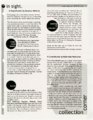
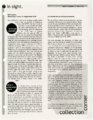
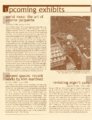
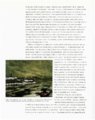
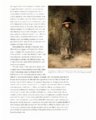
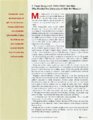
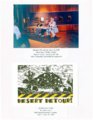
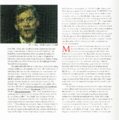
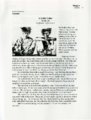
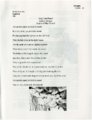
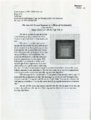
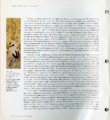
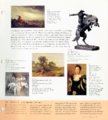
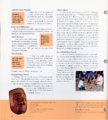
Show once again with the Pennsylvania Academy where he quickly became a mentor to young, aspiring artists such as John Sloan, George Luks (fig. 3), Everett Shinn, and William Glackens. In addition to their artistic studies, many of these artists were employed in various capacities at local newspapers and comm.ercial magazines. In the last few decades of the nineteenth century it was not technically or economically feasible to reproduce photographs in daily newspapers, n1.ost employed a staff of artists who illustrated news events with quick execution and a somewhat subjective loyalty to fact. The illustrators worked in tandem with reporters, often visiting events and making spontaneous, on-thespot sketches that could later be incorporated into complete drawings of the scene. Henri pushed his proteges to translate their efforts from newspaper and commercial illustration to painting. The essence of art, according to Henri, was life. He urged his students to take inspiration from the city streets, to find beauty in commonplace activities and ordinary people, and to capture the true spirit of life through free and spontaneous gestures. Over the course of the early 1900s, Henri and his pupils moved independently from Philadelphia to New York. Henri began teaching at the New 3. George Luks, The Little Gray Girl, 1905. Oil on can vas, 36 x 26 in. (91.4 x 66 cm ). Whitney Museum of Am erican Art, New York; Charles Simon Bequest 96.60.50 York School of Art, where he came in contact with students such as George Bellows, Glenn 0. Coleman, Guy Pene du Bois, and Edward Hopper. Henri continued to admonish his supporters to draw on the dynamism and density of urban life for their art: to represent the authentic through scenes of commonplace things, ethnic neighborhoods, and popular entertainment. Henri eventually mounted a group exhibition in 1908 at the Macbeth Galleries in defiance of the reigning art academies for having all but excluded urban realist work from their contemporary surveys. The exhibition included such artists as Sloan, Luks, Shinn, Glackens, Ernest Lawson, Arthur B. Davies, Maurice Prendergast, and Henri himself -dubbed "The Eight" by the press-who although stylistically different from one another were championed as part of a unified effort to present a new American art. Making use of their journalism connections, the artists were able to gather significant press coverage and public attention for the exhibition, which was characterized as a revolt against classical modes of painting and academic art. These artists were later known as the Ashcan School, referring to the gritty urban subject matter that they favored in their work. |