| OCR Text |
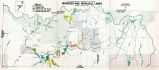
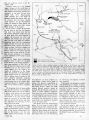
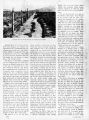
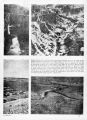
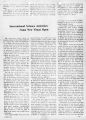
Show Central Arizona farms depend on life-giving irrigation. Although H.R. 4671 would authorize both dam projects, the Johnson administration has recommended the construction now of only one-the $238.6- million Marble Canyon dam. This dam is planned for a site 12.5 miles north of Grand Canyon National Park but still within the area known to geologists as the Grand Canyon. The Bureau of the Budget, speaking for the administration, has said that a decision on Bridge Canyon dam, which would cost an estimated 5511.3 million, should be deferred. The Bureau has recommended the establishment of a national water commission and indicated that this commission should study the dam's effect on Grand Canyon National Monument and National Park, along with (he dam's relation to regional water needs and the various alternatives for meeting those needs. Bridge Canyon dam would be in the Grand Canyon's lower reaches, well below the monument and the park, but its 93-mile-long reservoir would extend through the entire length oi the monument and through i 3 miles of that part of the canyon's inner gorge which forms the park's northwest boundary. Rising to a height oi 736 feet, the dam would have a generating capacilv of 1.5 million kilowatts, compared to the 600.000-kilowatt capacity ot the 310- foot Marble Canyon dam. Having better than twice the other dam's potential for production of power and revenue, the Bridge Canyon dam is the one the Bureau oi Reclamation and the sponsors of H.R. 4671 really want. The Bureau is, to say the least, 1602 doing nothing to discourage an idea, which has been circulating among the bill's sponsors, that a deal should be struck with the conservationists. The proposition would be (i) to abandon the proposal to build Marble Canyon dam and to have the National Park's boundaries extended northward to take in Marble Canyon, and (ii) to build Bridge Canyon dam with the agreement that this dam would be the last Grand Canyon dam ever to be built. But there is virtually no chance that the conservation groups-certainly not the Sierra Club-will concede that Bridge Canyon dam should be built. They can be expected to continue denouncing the Bridge Canyon proposal as contrary to the Grand Canyon National Park Act. The act would permit dams and reservoirs necessary for reclamation projects to be built in the park, but only when such construction is consistent with the park's primary purpose of preserving the canyon's scenery, wildlife, anil '"natural and historic objects." Representative John P. Savior of Pennsylvania, the Interior Committee's tanking Republican member and a caustic critic of the Bureau of Reclamation, has introduced a bill drafted by the Sierra Club that would enlarge the park to take in the entire Grand Canyon from Lee Ferry at the beginning of Marble Canyon to Grand Wash CI ill's at the head of Lake Mead. The bill would prohibit construction of any dams in the park. Ironically, the Sierra Club and the Bureau of Reclamation both revere, as a spiritual antecedent. John Wesley Powell, the one-armed Union Army veteran and geologist whose Grand Canyon expedition of 1869, by small boat, was one of history's great adventures. "We arc three-quarters of a mile in the depths of the earth." wrote Powell in his journal, ""and the great river shrinks into insignificance, as it dashes its angry waves against the walls and cliffs, that rise to the world above; they are but puny ripples, and we are but pigmies, running up and down the sands, or lost among the boulders. We have an unknown distance yet to run: an unknown river to explore. What falls there are. v\c know not: what rocks beset the channel, we know not; wrnat walls rise over the river, we know not. Ah, well! we may conjecture many things. The men talk as cheerfully as ever; jests are bandied about freely this morning; but to me the cheer is somber and the jests are ghastly." Powell's journal provides a classic account oi a journey down a ''wild river"-a term much used by conservationists, including the Secretary of the Interior. According to Georgie White, a white-water adventurer who has gone down rivers in Alaska, Canada, and Central America as well as in the Southwest, the Colorado, on its 280-mile course through the Grand Canyon, is the wildest river of them all. The only point of contact with the outside world is at Phantom Ranch, the Park Service camp on Bright Angel Creek for hikers and mule riders who take the Kaibab or Bright Angel trail to descend into the canyon from the South Rim. The Sierra Club wants to preserve the free-flowing river*-all of it, not just the 1 16 miles that would be left between the foot of Marble Canyon dam and the upper end of the reservoir behind Bridge Canyon dam. The club wants the inner gorge left undisturbed, preserving a unique geological record and the river which helped to write it. The club is outraged that spots such as Vasey's Paradise, a place of mosses, ferns, and flowering plants below a fountain that gushes from the side of Marble Canyon, would be drowned by the water rising behind Marble Canyon and Bridge Canyon dams. The National Park Service, in a 1963 report, also criticized the Bridge Canyon dam proposal. F.dwin D. McKee. now with the U.S. Geological Survey, was quoted as saying, in a paper prepared in 1942 when he was a Park s< if NCE, vol.. ss |