| Title |
Dixie Project legislation, 1963-1964 |
| Description |
Papers, correspondence, news articles, and text of Congressional bills about the Dixie Project, southwestern Utah |
| Subject |
Dixie Project; Water-supply--Utah--Washington County; Water resources development--Utah--Washington County; Irrigation--Utah--Washington County;Water-supply--Utah--Iron County; Water-supply--Utah--Cedar City |
| Contributor |
Clyde, George Dewey, 1898-1972; Bingham, Jay R.; Beasley, D. Otis; Bennett, Wallace F. (Wallace Foster), 1898- ; Carter, Luther J. |
| Additional Information |
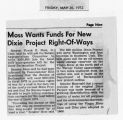
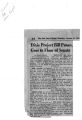
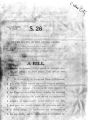
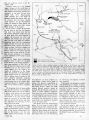
Includes: Newspaper articles on Dixie Project, 1963-1964; Copies of 1953 agreements on use of Kolob Reservoir water; Applications for diversion of Crystal Creek; Congressional Record text of House bill H.R. 3279 and Senate bills S. 26 (from 1961 by Frank Moss) and 655 (from 1963 by W.F. Bennett); Statements of support from Utah Gov. George D. Clyde; Jary R. Bingham (Director of Utah Water and Power Board), Senator Wallace F. Bennett and others; 88th Congress, 2d session, House of Representatives report no. 1725, "Dixie Project, Utah, Report to accompany H.R. 3279" by D. Otis Beasley, Asst. Sec. of Interior; and final legislation, Pub. Law 88-565, approved Sept. 2, 1964, "An act to authorize the Secretary of the Interior to construct, operate, and maintain the Dixie project, Utah, and for other purposes." Also includes article, "Grand Canyon: Colorado dams debated," by Luther J. Carter, fromScience vol. 152 (17 June 1966), p. 1600-1605 |
| Spatial Coverage |
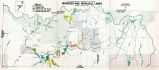
Crystal Creek (Utah); Kolob Creek (Utah); Kolob Reservoir (Utah); Virgin River Basin; Santa Clara River (Utah); Washington County (Utah) |
| Collection Number and Name |
Accn0823 bx 30 fd 8; ; John S. Boyden papers |
| Rights Management |
Digital Image Copyright 2009, University of Utah. All Rights Reserved. |
| Holding Institution |
J. Willard Marriott Library, University of Utah |
| Date |
1953; 1961; 1963; 1964; 1966 |
| Digitization Specifications |
Original scanned on Epson Expression 10000 XL and saved as 400 ppi TIFF. Display image generated in CONTENTdm. |
| Publisher |
Digitized by J. Willard Marriott Library, University of Utah |
| Type |
Text |
| ARK |
ark:/87278/s61835g2 |
| Setname |
wwdl_neh |
| ID |
1148037 |
| Reference URL |
https://collections.lib.utah.edu/ark:/87278/s61835g2 |
| Title |
Page 66 |
| Setname |
wwdl_neh |
| ID |
1148009 |
| OCR Text |
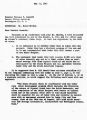
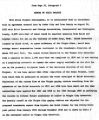
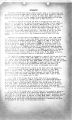
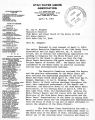
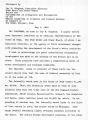
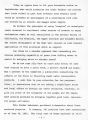
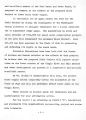
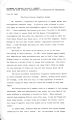
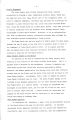
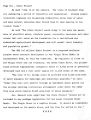
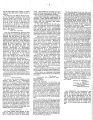
Show - 3 - The major benefits of the project of course will accrue to Washington County, in which the main facilities will be located. Cedar City, in Iron County, will also be benefitted through my amendment in the Senate-passed bill which points out the already existing contractual arrangement under which the Cedar City area would receive 8,000 acre-feet of water annually. This language was written so that Cedar City's citizens would be fully protected. When the Kolob Dam and Reservoir was constructed by the Kolob Reservoir and Storage in Washington County in 1956, it was agreed that Cedar City would construct works for the diversion of up to 8,000 acre-feet of water from tributaries of the Virgin River for municipal use. It should be noted that Cedar City agreed to reimburse the project for power revenue losses resulting from this diversion. The Dixie Project bills introduced in the 88th Congress by Senator Moss and myself were essentially the same, except for a provision in my bill relating to the Cedar City agreement. In my testimony before the Senate Irrigation and Reclamation Subcommittee, I said it would be equally satisfactory to me for the Subcommittee either to have Senator Moss' bill amended to add this clause or to approve my bill, whichever the committee desired. I was pleased, therefore, when the committee agreed to include my Cedar City amendment in S. 26. Local People United During the course of the previous hearings on the Dixie Project, it has been repeatedly illustrated that the people of Utah are united in their earnest desire to see the Dixie Project built after its having been under study by the Bureau of Reclamation since at least 1918. It was only World War II which blocked much earlier construction of the project at a cost that would have been but a relatively small fraction of the burdens which the people of Utah's Dixie are willing to undertake today so that the project may become a reality. In fact, the local people have agreed to impose an almost unprecedented tax burden to repay their share of the project costs. This five mill ad valorem tax contrasts with the usual levy of from one to two mills for other reclamation projects. |
| Reference URL |
https://collections.lib.utah.edu/ark:/87278/s61835g2/1148009 |