| OCR Text |
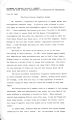
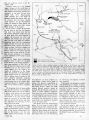
Show • N E V . S AND GOIV.!V?£_NT Grand Canyon: Colorado Dams Debated The Grand Canyon," carved bv the Colorado River over a leisure!} 9 million years, is indisputable uric of nature's great rtfasterpieces. 1 he politicians ot the Pacilic Southwest, in something ot a hurry, have beeft at work on a masterpiece o! their own-- a multi-billiOn-dollar WJ!U project which, while ofi'ens.ve to serine tastes, is drawn to a scale impressive by human standards. Besides two dams in she Gra^d Canyon, which are the project's most celebrated feature to date, it would include the Central Arizona Project, consisting principally of a large aqueduct running hundreds of miles across Arizona, from Cake Havasu on the ( olorado TO Phoenix and Tucson; a number of reclamation and water supply projects in other Colorado basin states; and ultimately the project's key-tent- an aqueduct system to bring to the Colorado millions ol acre-feet o! water from some other river basin, prohahlv the ( olum-bia. The project's initial cost is estimated at $1.6 billion: its ultimate cost is not known, but it would run into additional billions. Legislation Jo hniMjfe the project is now before the Interior Committee of the U.S. House of Representatives. The bill, H.R. 4671. will, it ever enacted, be a remarkable achievement of basin diplomacy to which Representative Morris K. Udall o! Arizona, the Met-ternich of the Colorado, will have contributed much. The proposal represents an intricate, delicate meshing and balancing ot the interests of the Cpper ( olorado Basin states-- Colorado. Utah. VVyprning, and New Mexico-with those o\ the Lower Basin siate:<- Arizona. Nevada, and California Mot 'cover, ii harmonizes the interests of Arizona :aul California, whose relations with respect lo use of the Colorado have been marked by much disharmony: It retains certain elements, such as the canyon dams and the concept of water importation, of the Pacific Southwest Water Plan sub- 1600 mitted to Congress in 1964 by Secretary of the Interior Stewart L. Udall, the congressman's brother. The Seeling of honest compromise inspired by H.R. 4671 within the Colorado basin is not the feeling the bill has always produced outside the b^sin. Its provisions for a water importation Study have generated fears in the Northwest that the Columbia's now abundant \%.a?t_i s ma) be ser.oussv diminished by demands from the Southwest,'. a:Vpi»ion whose political power has been gfjywing as rapidly as us thirst. Nationally, conservationist groups have become alarmed b) the proposal to build the canyon dams. The conservationists* led chiefly by the Sierra Club, have had some success in contributing to the atmosphere ol doubt and criticism that seems to have enveloped H.R. 467 I. Indeed, the opposition appears strong enough io make passage <^f the bill without major alterations doubtful-yet any important change in the measure could cause the compromise among the basin states to fall apart. The intricacies ol Southwest water politics, fully revealed in H.R -1671, are best explained by the history of the region's policies regarding use of the Colorado. The "Law of the River." as developed through two interstate compacts, several acts of Congress, a treaty with Mexico, and court decisions, apportions the Colorado's water among the various basin states and Mexico. The apportionments are based on an assumed annual flow of 17.5 million acre-feet a year-7.5 million for the Upper Basin. 7.5 million for the 1 ower Basin, dna\ 1.5 million for Mexico. However, from 1906 to 1965 the river's total yearly How averaged only 15 million acre-feet, with annual (lows ranging from ihc record high of 24 million in 1917 to the record low of 5.6 million in 1954 Huts far, the deficit h;t.s existed solely on paper because only California has in fact been withdrawing its legal quota. California, entitled' y 4.4 million acre-feet, has been withy, *ipg 5 I million by dipping into the* unused share oi other states. As other basin states begin withdrawing then fuIi allowances, through future reclamation ,n\d water supply projects, the need to conserve and augment the Colorado's flow will become critical. Estimates as to when the critical moment will arrive vary, but it is believed to be not more than a generation away. The purpose of H.R. 467! is to "-make the river whole' by increasing total water available as well as to authorize, for immediate construction, the Central Arizona Project (CAP) and five reclamation projects in Colorado and New Mexico The cam on dams and the importation of water from outside the basin are both viewed by the bill's sponsors as essential to their long-range objectives. The dams Would serve no Water storage tunction, but, once having paid for themselves from the sale of the electricity that they would generate, they would be expected to contribute to a new Lower Basin Development Fund. This fund, which would also receive the proceeds from water sales and part ol the power revenues from Hoover dam and other existing dams on the Lower Colorado, would be used to reimburse the federal tteasury for about 90 percent of the $525 million to be spent on CAP and for part of the much larger sums to be spent on the aqueducts, pumping stations, and other works needed to import water to the Lower Colorado. The bill would direct the Secretary cd the Interior to study various possibilities for augmenting the Colorado basin's water supply. These include water salvage and conservation, weather modification, and desalinization of sea water: but, in the sponsors' judgment, the most promising possibility is water importation. The study would contemplate importing, initially, up to 6 5 million acre- !eet of water a year (including 2 million acre-feet to the Upper Basin), which would make up the deficit under present quotas anil provide for additional needs that arise. Another 2 million acre-feet might be withdrawn from the exporting basin (or basins), but diverted to water users along the route to the Colorado The bill was amended hist week to have the study cover West Texas, which is not part of the Colorado basin but is potently represented in Congress The deadline for completion of the importation plan, together with the supporting feasibility studies SCIFNCE, VOL. 152 |