| OCR Text |
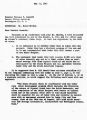
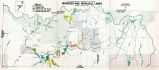
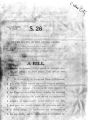
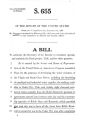
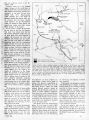
Show ( 2 - pie of Utah's Dixie are willing to undertake so that the project may become a reality. On January 9 of 1963, I directed a letter to my junior colleague from Utah, Senator Moss, inviting him to join in sponsoring the Dixie project. Five days later he chose instead to introduce his own bill, S. 26. So that I would be clearly on record in support of the project I introduced my bill, S. 655. Utah's Congressmen LAURENCE J. BURTON and SHERMAN P. LLOYD also introduced their Dixie bills in the House. CEDAR CITY PROTECTED The bills introduced by Senator Moss and myself were essentially the same, except for one provision in my bill which pointed out the already existing contractual arrangement under which the Cedar City area would receive 8,000 acre-feet of water annually. This language was written so that Cedar City's citizens would be fully protected. When the Kolob Dam and Reservoir was constructed by the Kolob Reservoir and Storage Association in Washington County, Utah, in 1956, it was agreed that Cedar City would construct works for the diversion of up to 8,000 acre-feet of water from tributaries of the Virgin River for municipal use. It should be noted that Cedar City agreed to reimburse the project for power revenue losses resulting from this diversion. In my testimony before the Senate Interior Committee, I said it would be equally satisfactory to me for the subcommittee either to have Senator Moss' bill amended to add this clause or to approve my bill, whichever the committee desired. The committee agreed to include my Cedar City amendment in the bill which it reported to the Senate. My only concern throughout the entire consideration of this bill has been to get it approved, not over who was to get the credit for it. PROJECT BENEFITS Of course, the major benefits of the project will accrue to Washington County, in which it is located. The Dixie project is a proposed multiple-purpose water resource development in the Virgin River Basin in southwestern Utah. By regulation of flows of the Virgin River and its tributary, the Santa Clara River, the project will provide supplemental irrigation water to 9,455 acres of presently developed land and a full water supply for 11,615 acres of new land. The city of St. George will be provided with 5,000 acre-feet of water annually for municipal and industrial purposes. Construction of three powerplants will produce about 44,500 kilowatt-hours of firm electric energy and about 1,900,000 kilowatt- hours of secondary energy for sale annually. In addition, minor flood control benefits will result, as will fish and wildlife and recreation benefits. PROJECT REPAYMENT The local people have agreed to impose an almost unprecedentedly high tax to repay their share of the project costs. This 5-mill ad valorem tax contrasts with the usual levy of from 1 to 2 mills for other reclamation projects. The local people have further demonstrated their complete cooperation by forming a local conservancy district to assume responsibility for repayment contracts and for operation and maintenance of the project. It has been determined by all agencies concerned that the project has engineering feasibility, that it is economically justified, that the reimbursable cost can be repaid within the standard 50-year repayment period, and that construction will be a forward step in the conservation and utilization of the lands and water resources of the entire region. REQUEST FOR EARLY CONSTRUCTION Authorization of the Dixie project will fill a vital niche in this arid region of the State and of the country. Because of the urgent need for early construction of the project, Congressman LAURENCE J. BURTON, Congressman SHERMAN P. LLOYD, and I have directed a letter to President Johnson to urge administration approval of a supplemental appropriation of $365,000 to enable the Bureau to complete all preconstruction studies and plans during this fiscal year. In addition, we have submitted statements to the Senate and House Appropriations Committees urging that funds for the Dixie project be included in the supplemental appropriations bill currently being considered by the committee. This would allow construction to begin next year, thus saving a full year's time in getting this vital reclamation project under way. I ask unanimous consent that our joint letter to the President, dated August 17, be included in the RECORD at this point. There being no objection, the letter was ordered to be printed in the RECORD, as follows: U.S. SENATE, Washington, D.C., August 18, 1964. THE PRESIDENT, The White House, Washington, D.C. DEAR MR. PRESIDENT: AS you know, the House of Representatives yesterday approved H.R. 3279 to authorize construction of the Dixie project in Utah. The Senate last October gave its unanimous approval to a similar bill; thus, House passage marks a significant final milestone in the long struggle to obtain authorization of this vital reclamation project. The bill may go to a conference committee to reconcile the differences in the Senate- and House-passed versions; however, it has wide bipartisan support and the conference report likely will be issued without delay. It is our purpose in writing you at this time to call your attention to the urgent need to commence construction of the Dixie project at the earliest possible date and to respectfully request your assistance in obtaining the necessary funds to complete the definite plan report and final details preparatory to construction. Since the Public Works Appropriations bill has passed both Houses of Congress, it is impossible to include funds for the Dixie project; however, there is still sufficient time remaining in the current session of Congress for action to be taken on a supplemental appropriation. We therefore respectfully urge that a request for $365,000 to complete preconstruction work on the Dixie reclamation project be sent to the Congress, for approval conditional upon final congressional authorization. This same procedure was adopted by President Eisenhower in connection with the upper Colorado River storage project in his budgets submitted in both January of 1955 and 1956, even though the project was not authorized until April of 1956. Because of his foresight, construction was started immediately and delay was avoided. We know you will wish to do as much for the Dixie project. The people of southern Utah know what a drought means. Likewise, they know that a ceiling is placed upon their future and their economic growth unless they get the long-hoped-for water from the Dixie project. The project would permit irrigation of 21,070 acres of farmland in Washington County and provide a 5,000-acre-feet municipal water supply to the city of St. George. In addition, it would also furnish 8,000 acre-feet of water to Cedar City in Iron County. Time is of the essence. The towns of southern Utah are undergoing a period of transition and reappraisal. Already modern interstate highways are bypassing communities whose lack of water and many natural resources has forced them to lean heavily on the tourist trade. The Dixie project would bring to the area the assurance of plentiful water, electric power, recreation resources and other values that will serve as the foundation for a revitalized and modernized agricultural development and will permit local industry and population growth. The future of the entire area is dependent upon the Dixie project. It is our sincere hope that final plans may be completed and contracts let to initiate construction during the current fiscal year. Funds can be provided through a supplemental approproiations bill, and we respectfully hope and urge that you will send a budget request to the Congress for this purpose. It should be noted that the crops which will be grown on the farmlands involved are not in surplus. Likewise, it must be emphasized that the money for which we have asked will be repaid. It is a loan and in the case of the municipal and industrial water features will be repaid with interest. We are grateful for your consideration of our request. WALLACE P. BENNETT, U.S. Senator. LAURENCE J. BURTON, Member of Congress. SHERMAN P. LLOYD, Member of Congress. Mr. BENNETT. Mr. President, I am happy to join with my colleague [Mr. Moss] in urging that the Senate concur in the House amendment to S. 26. We would then have another year in which to make a drive to get things done that would make the Dixie project the very successful project it would have been if the House had not acted as it did. |