| OCR Text |
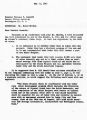
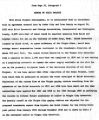
Show ( ( DIXIE PROJECT, UTAH 9 only from the Dixie project it would require 65 years to repay the costs allocated to irrigation, and to achieve repayment in 60 years would require outside financial assistance of $3,754,822. Our planning report suggested that the required financial assistance be derived from power revenues of Federal projects in the Lower Colorado River Basin.^ A reanalysis of the project incorporating the precepts of ''Policies, Standards, and Procedures in the Formulation, Evaluation, and Review of Plans for Use and Development of Water and Related Land Resources" (S. Doc. 97, 87th Cong.) was submitted to the Senate Committee on Interior and Insular Affairs in May 1963. This re-analysis resulted in a decrease in estimated project costs of $46,000 to $44,577,000 and in the irrigation allocation of $776,000 to $30,635,- 000. Even with the diminished allocation to irrigation, financial assistance in the amount of $3,232,440 from an out-of-project source was contemplated to repay the costs allocated to irrigation within 50 years plus a 10-year development period. As you are aware, this Department has recently released a Pacific Southwest water plan to accomplish development of that region's water resources on a regional basis. A key feature of the plan is a regional development fund, which would operate similarly to the Upper Colorado River Basin fund. _ On the basis of its location in the Lower Colorado River Basin, and because-as proposed for development in the Department's planning report of March 18, 1963 (H. Doc. 86, 88th Cong.)-the Dixie project would require out-of-project financial assistance to assure repayment of the costs allocated to irrigation within the time limit established in current policy, the Dixie project was included as a unit of our Southwest water plan proposal. We would prefer to see the project authorized as a constituent element of a regionwide development. Against this must be set the intense and virtually unanimous desire on the part of Utahans that the Dixie project go forward without delay. The city of St. George is on record as willing to contract for the municipal and industrial water supply and the electric energy that the project would develop. In anticipation of the project's authorization the Washington County Water Conservancy District was formed over a year ago to serve as the general administrative and repayment contracting agency for the project. We have consulted with representatives of the State and local organizations who have been attempting to achieve a reformulation of the project on a financially self-sustaining basis in order to overcome objections to the provision of financial assistance from out-of- project sources. This reformulation of the project plan involves assumption by the State of Utah of $1,904,000 of project costs attributable to relocating State Highway 15 around the Virgin City Reservoir site, and making upward adjustments in the power and municipal water rates to produce more revenues which can be used to repay costs allocated to irrigation. We have restudied the project on the foregoing basis and find that full repajmient of all project costs within the time limits customarily imposed for each function as a matter of policy could be achieved using revenues from the Dixie project alone. We would not oppose authorization of the Dixie project as a financially self-contained unit. We believe the authorizing legislation should not preclude incorporation of the project into a regional water |