| OCR Text |
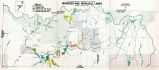
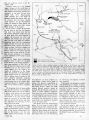
Show and cost estimates, would be 31 DC cember 1970. \__ Arizona's need for CAP, deemed urgent because of the steady loss of existing farm land as ground-water supplies decline and pumping becomes uneconomic, is the great driving force behind H.R. 4671. Representative Udall concedes that CAP might be financed without the canyon dams, but he contends that the dams, dubbed "cash registers" for the Development Fund, are needed to help finance the importation system and other Lower Basin projects of the future. In any event, if either the provision for the dams or that for the importation study were struck from the bill, the Arizona delegation might find that its basin allies, who were expected to support the provision for CAP, had vanished, like Indians into the wilderness. In fact, even with the revenue-producing dams and the importation study provided for in the bill, Arizona has had to make a major concession in order to obtain California's support for CAP. Arizona has agreed to give California's quota of 4.4 million acre-feet priority over its own quota of 2.8 million acre-feet, which the U.S. Supreme Court confirmed in 1963 after 12 years of litigation. The five Upper Basin reclamation projects-three of them too marginal to get Bureau of the Budget approval- have been included in H.R. 4671 as part of the price Representative Udall has had to pay for the state of Colorado's support for CAP. Udall is not hostile to reclamation in the Upper Basin, but inclusion of the five projects, which would be built at a total cost of $361.4 million, does not make his bill more attractive politically. Colorado can speak softly on such matters and still be heard. One of her citizens. Representative Wayne N. Aspinall, is chairman of the House Interior Committee. The foregoing sketch of basin politics does not do full justice to the complexities of the subject but is to be taken as a primer from which one may safely conclude that Colorado water policy is not arrived at by pure reason. Plans made for one part of the basin must take into account the desires and interests, legitimate and otherwise, of every other part of the basin. Moreover, water project development in the West is characterized by a high degree of institutional rigidity. The policies of the Interior Department's Bureau of Reclamation, and the laws which govern those policies, are such COLO. Central Arizona Project aqueduct system, to bring water to the Phoenix and Tucson areas, would he financed in part from water sales, in part from power revenues expected eventually from the proposed Bridge and Marble Canyon dams, and in part with funds from the existing Hoover, Parker, and Davis dams. The Little Colorado and Paria dams would serve only to catch silt. Orme Dam, near Phoenix, would create a storage and flood-control reservoir at the end of CAP's main aqueduct. The Buttes, Hooker, and Charleston dams, all part of CAP, would regulate the flow of the Gila and San Pedro rivers. that decisions on water projects are made within a rather narrow range of choice. The Bureau's contribution to the development of the West, as in the Salt River Project which has made modern Phoenix possible, cannot be gainsaid. But the Bureau cannot be expected to render objective judgments when faced, say, with a choice between recommending the construction of power dams in the Grand Canyon and recommending the constructiom oi steam plants fired by the Southwcst's abundant coal or by nuclear fuel. The Bureau never has built thermal plants. It is not eager to start a fight with the private utility industry by proposing to build some. In fact. Secretary Udall has been making peace with the utilities by finallv reaching agreements, after long controversy, for the sharing of cost-saving interregional transmission networks. Traditionally, the Bureau has looked, with the blessing of Congress, to hydroelectric plants as the revenue-producing units for its "basin account," a device sometimes used to encourage acceptance of water projects which would have trouble standing on their own. Representative Aspinall and many of his colleagues on the Interior Committee, which is dominated by Westerners, have, or think they have, a vested interest in continuing to have things done in the traditional manner. To no one's surprise, when the Pacific Southwest Water Plan was proposed in 1964. the Bureau of Reclamation recommended the construction of the Bridge Canyon and Marble Canyon dams. 17 JUNE 1966 1601 |