| OCR Text |
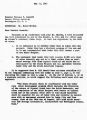
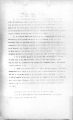
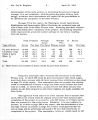
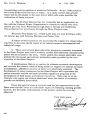
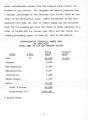
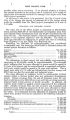
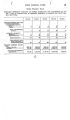
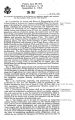
Show Mr. Jay R. Bingham - 2 - April 25, 1963 determination of the early settlers in developing the present irrigated acreage, it is not unrealistic, with the advancing status of farm technology, to believe their descendants will exploit all the possibilities to be offered by the completion of the Dixie Project. On page 173 of the report, the Washington County Agricultural Stabilization and Conservation Office illustrates the estimated type and size of farm units in the Dixie Project area. Assuming that these relationships hold steady after completion of the project, the following tabulation would represent the projected number and type of new farms resulting from the project. Total Cropland Average Number of Farms Acres Pro- Type of F a rm Acres Per Cent Per F a rm Present jected New Per Cent Pt. time farmers Livestock-crops Grade A dairy Other 1_/ Total 21,060 100.0 33.0 286 638 352 100.0 1/ These farms are included in farms owned by part-time farmers. 8,845 6,529 3,917 1,769 42.0 31.0 18.6 8.4 18. 2 71.5 65. 1 30.5 218 41 27 (26) 486 92 60 (58) 268 51 33 (32) 76. 2 14.4 9.4 Using this assumption there would be 352 new farms in the Dixie Project area, of which 268 would be part time farmers who would supplement their farm incomes with off-farm incomes from activities as described on page 173 of the report. This assumption does not consider the existing trend of consolidation of farms in large and fewer units because the trend may be curbed, or slowed down, as land owners will likely become less anxious to sell their property as full water supplies a r e made available for their lands. This approach would seem to be more realistic than to assume that all 21, 060 acres of land would be utilized only by full-time farmers after completion of the project to account for only 263 farms, or 23 fewer farms than a r e presently in the project area. Similarly, it is less realistic to assume, as is done on page 188 of the report, that the distribution of size and type of farm on present acreage will remain unchanged and that the new acreage will be a r b i t r a r i l y allocated to 80 a c r e full-time farms on completion of the project. This assumption, however, would result in 145 |