| Title |
Dixie Project legislation, 1963-1964 |
| Description |
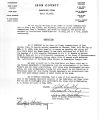
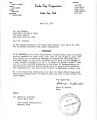
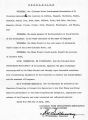
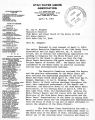
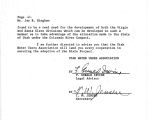
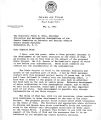
Papers, correspondence, news articles, and text of Congressional bills about the Dixie Project, southwestern Utah |
| Subject |
Dixie Project; Water-supply--Utah--Washington County; Water resources development--Utah--Washington County; Irrigation--Utah--Washington County;Water-supply--Utah--Iron County; Water-supply--Utah--Cedar City |
| Contributor |
Clyde, George Dewey, 1898-1972; Bingham, Jay R.; Beasley, D. Otis; Bennett, Wallace F. (Wallace Foster), 1898- ; Carter, Luther J. |
| Additional Information |
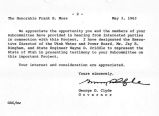
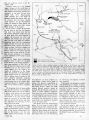
Includes: Newspaper articles on Dixie Project, 1963-1964; Copies of 1953 agreements on use of Kolob Reservoir water; Applications for diversion of Crystal Creek; Congressional Record text of House bill H.R. 3279 and Senate bills S. 26 (from 1961 by Frank Moss) and 655 (from 1963 by W.F. Bennett); Statements of support from Utah Gov. George D. Clyde; Jary R. Bingham (Director of Utah Water and Power Board), Senator Wallace F. Bennett and others; 88th Congress, 2d session, House of Representatives report no. 1725, "Dixie Project, Utah, Report to accompany H.R. 3279" by D. Otis Beasley, Asst. Sec. of Interior; and final legislation, Pub. Law 88-565, approved Sept. 2, 1964, "An act to authorize the Secretary of the Interior to construct, operate, and maintain the Dixie project, Utah, and for other purposes." Also includes article, "Grand Canyon: Colorado dams debated," by Luther J. Carter, fromScience vol. 152 (17 June 1966), p. 1600-1605 |
| Spatial Coverage |
Crystal Creek (Utah); Kolob Creek (Utah); Kolob Reservoir (Utah); Virgin River Basin; Santa Clara River (Utah); Washington County (Utah) |
| Collection Number and Name |
Accn0823 bx 30 fd 8; ; John S. Boyden papers |
| Rights Management |
Digital Image Copyright 2009, University of Utah. All Rights Reserved. |
| Holding Institution |
J. Willard Marriott Library, University of Utah |
| Date |
1953; 1961; 1963; 1964; 1966 |
| Digitization Specifications |
Original scanned on Epson Expression 10000 XL and saved as 400 ppi TIFF. Display image generated in CONTENTdm. |
| Publisher |
Digitized by J. Willard Marriott Library, University of Utah |
| Type |
Text |
| ARK |
ark:/87278/s61835g2 |
| Setname |
wwdl_neh |
| ID |
1148037 |
| Reference URL |
https://collections.lib.utah.edu/ark:/87278/s61835g2 |
| Title |
Page 65 |
| Setname |
wwdl_neh |
| ID |
1148008 |
| OCR Text |
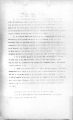
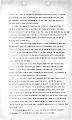
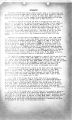
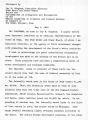
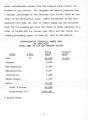
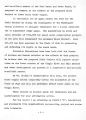
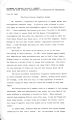
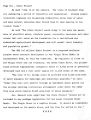
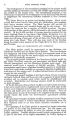
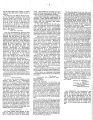
Show - 2 - River is subject periodically to torrential rainstorms which have resulted in devastating damage to farms and homes as well as a tremendous loss of precious water. These drought and flood conditions dramatically demonstrate the need for a large, centralized program to control the Virgin River and its tributary, the Santa Clara, and to bring the two rivers into full production. Time is of the essence. The towns of southern Utah are undergoing a period of transition and reappraisal. Already modern interstate highways are bypassing communities whose lack of water and many natural resources have forced them to lean heavily on the tourist trade. The Dixie Project would bring to the area the assurance of plentiful water, electric power, recreation resources and other values that will serve as the foundation for a revitalized and modernized agricultural development and will permit local industry and population growth. Unless the Dixie Project is built, there appears to be no possibility that additional water supplies can be developed. The future of the entire area is dependent upon Congressional approval and construction of the Dixie Project. Project Benefits The Dixie Project is a proposed multiple-purpose water resource development in the Virgin River Basin in southwestern Utah. By regulation of flows of the Virgin River and its tributary, the Santa Clara River, the project would provide supplemental irrigation water to 9,455 acres of presently developed land and a full water supply for 11,615 acres of new land. The city of St. George would be provided with 5^000 acre-feet of water annually for municipal and industrial purposes. Construction of three powerplants would produce about 44,500,000 kilowatt-hours of firm electric energy and about 1,900,000 kilowatt-hours of secondary energy for sale annually. In addition, minor flood control benefits would result, as would fish and wildlife and recreation benefits. Water storage facilities are considered to be the primary need of the Dixie Project area. Development of such facilities would provide for the conservation and orderly release of water that is now wasted in floods. The project also will permit the conservation of those portions of normal flows which are in excess of immediate requirements for irrigation and other purposes. |
| Reference URL |
https://collections.lib.utah.edu/ark:/87278/s61835g2/1148008 |