| OCR Text |
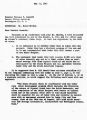
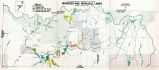
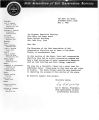
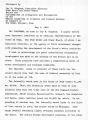
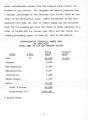
Show ( ( 8 DIXIE PROJECT, UTAH DEPARTMENT OF THE INTERIOR, OFFICE OF THE SECRETARY, Washington, D.C., June 19, 1964- Hon. WAYNE N. ASPINALL, Chairman, Committee on Interior and Insular Affairs, House of Representatives, Washington, D.C. DEAR MR. ASPINALL: This responds to your request for the views of the Department of the Interior on H.R. 3279 and H.R. 4178, identical bills to authorize the Secretary of the Interior to construct, operate, and maintain the Dixie project, Utah, and for other purposes. We would not object to enactment of either of the above bills if amended as suggested hereafter. The Dixie project area is in the Virgin River Basin in southwestern Utah. The Virgin River rises in Utah and flows through parts of Arizona and Nevada before joining the Colorado River at the northern arm of Lake Mead. The Dixie project would conserve and regulate the flows of the Virgin River and its tributary, the Santa Clara. Floodflows of these rivers are now largely wasted. An adequate and predictable water supply for irrigation is a paramount necessity to stabilize and revitalize the agricultural economy of the region and support municipal and industrial growth. The Dixie project is multipurpose in character. It would provide irrigation water for 21,060 acres of land, of which 9,445 acres would receive supplemental water, and 11,615 acres would receive a new irrigation water supply. A municipal and industrial water supply would be provided for the city of St. George, Utah. Electric energy for project use and commercial sale would be produced. Benefits to fish and wildlife enhancement and recreation would accrue, and operation of the project would produce flood control benefits. The project would be constructed as two divisions, Hurricane and Santa Clara. The two divisions are contiguous and closely related through the economic needs of the area, although each has its own water supply and their project works would not be physically connected. The principal project facilities of the Hurricane division would be the Virgin City Dam, Reservoir, and powerplant, the Bench Lake and Warner powerplants, and the Hurricane division main canal. In the Santa Clara division the lower Gunlock Dam and Reservoir would be constructed, and an existing canal would be rehabilitated and extended. Distribution and drainage systems would be constructed on both divisions. Both of the bills before your committee would authorize the Dixie project on the basis that the costs allocated to irrigation, but beyond the ability of the water users to repay in 50 years plus a 10-year development period, would be returned to the reclamation fund from revenues derived from the disposition of power marketed from other Federal projects in the Lower Colorado River Basin. This provision appears in the bills because our studies to date have indicated that financial assistance from a source outside the project would be required to repay the costs allocated to irrigation within 60 years (50 years following a 10-yeai development period). For example, the Department's planning report on the Dixie project (H. Doc. 86, 88th Cong.) indicates the cost of the project to be $44,623,000, with $31,411,000 allocated to irrigation. Using revenues |