| OCR Text |
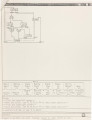
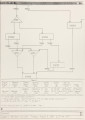
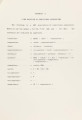
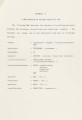
Show 46 costs by correcting errors at this level rather than after the des ign is realized. The simulator used in GCS is the one which was developed and implemented in the ASSASSIN system. The particular computer where the ASSASSIN system has been implemented was the DEC-20 system and the display device is a Teleray-1061 terminal. The interface was built entirely upon EMODE [4] which was a screen editor (implemented in PSL ) developed by the Utah Symbolic Computation Group. Carter's simulator is incorporated into GCS, however, since NMODE (the successor to EMODE) on the Apollo has not yet been fully supported , a different interface has been employed by GCS. GCS takes the advantage of Apollo's multi- window capability to set up an interface which is quite device dependent (i.e., the way the screen is partitioned, the location of some of the display, etc., are restricted). As mentioned in subsection 2.4, the screen is arranged to have the graphical window placed in the upper seventy percent of the standard output window and the rest is used for the menus and the output echoing. The simulator can be invoked by picking a menu item from the top level menu. After the simulator is invoked, the area other than the graphical display will be erased, and a window with state names, changeable inputs and all the outputs of the control-unit displayed in a tabular fashion will pop- up on top of it instead. While in the presence of this interface, the designer can set certain input variables to be either true or false by positioning the cursor in front of that input and hitting a control key <CTRL>T. The designer can specify that some states are active or inactive. After |