| OCR Text |
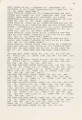
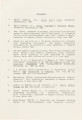
Show 9 2.2 Why PSL? PSL(Portable Standard LISP) is an ongoing project of the Utah Symbolic Computation Group (USCG) at the University of Utah and is recognized as an efficient and portable LISP implementation. It runs with quite satisfactory performance on our target computer the Apollo Domain system. PSL also has a machine oriented "mode" for systems programming in LISP (SYSLISP) which permits access to the target machine with about as much efficiency as in C. This mode provides for significant increase in the run-time efficiency of user programs. This feature has been successfully applied to the Apollo system to enable the direct access of several system packages from inside PSL. A general mechanism was designed to call system functions providing data type conversion from the PSL data types to the underlying types which the operating system expected. This SYSCALL package [9] was designed and written by Steve Lowder and Gerald Maguire. Furthermore, PSL provides flexible, hierarchical data structures. The dynamic storage capabilities of PSL data structures allow many capabilities, including the representation of programs as data and implementation of knowledge-base applications. PSL also has an interactive programming environment that allows for rapid development of software, including a resident compiler, mature programming tools and incremental redefinition of software. Runtime type checking allows generic operations, does not force declarations of variables and permits dynamic error handling. extensible syntax and semantics and PSL also provides a base for an aids in rapid prototyping of |