| OCR Text |
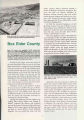
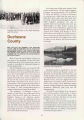
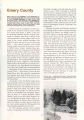
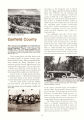
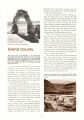
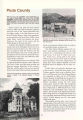
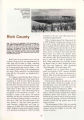
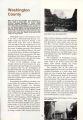
Show Washington - County Area: 2,422 square miles; population: 38,600; county seat: St. - 0rae: Otidn of countv name: after President Geome State Park, Gunluck Remoir, Red miff6 Recreation Area,- St. Gearge Temple and Tabernacle, Pihe Valley chapel, Wells Fap Express building in Silver Reef, Washington Cottan Fadory, Jacob HamMin home in Santa Clara, Brigham Young home and Dixie College in St. George, Grafton. Washington County in the southwest corner of the state is nicknamed Dixie because it in-cludes a large area around St. George, in the valley of the Virgin River and its tributaries, with the highest average temperatures in the state and very mild winters. The eastern third of the county, including spectacular Zion National Park, is part of the Colorado Plateau. The west-ern two- thirds lies in the Basin and Range geo-graphic province. The lowest point in the state, along Beaver Dam Wash ( 2,350 feet), is near the county's southwest corner, while the Pine Valley Mountains in the north top 10,000 feet. Traces of the prehistoric Archaic and Anasazi cultures have been found in the area, and the Santa Clara and Virgin rivers provided an important base for the development of Southern Paiute life. The Dominguez- Escalante expedition in 1776 recorded the first descrip-tion of the Indians in this area. In 1980 the fed-eral government restored traditional tribal lands west of Santa Clara to the Shivwits branch of Southern Paiutes. In an attempt to establish an overland route to the Pacific and southern California ( the so-called Mormon Corridor) the Mormons founded a string of settlements running south-west from the Salt Lake Valley. Brigham Young sent small groups into southwestern Utah as early as 1852 to test the agricultural potential of the warm climate. Fort Harmony was estab-lished in 1852; Santa Clara, 1854; washington, 1857; Toquerville, 1858; Graftoa, 1859; and Adventure ( Rockville), 1860. But until 1861 - when several hundred families were called by church leaders to go to the area to raise cotton, figs, olives, grapes, sugar, almonds, and tobacco - colonization remained chiefly an experiment. St. George, settled in 186 1, became the center of . . - . .- Great White Throne, Zion National Park. Dixie, and the colonists succeeded in producing sizable amounts of cotton, wine, and molasses. The demand for cotton lasted until after the Civil War. The wine industry also grew during this period, as did mining, but when mining de-creased so did the demand for wine. During 1875- 80 Silver Reef, northwest of Leeds, was a booming mining town, and Wells Fargo repor-tedly shipped more than $ 8,000,000 in bullion from the mines there. The boundaries of Washington County, formed in 1852 by the legislature, stretched the entire width of the territory ( then some 600 miles). After several changes the county achieved its present size and shape in 1892. The economic base of the county has changed significantly over the years from its ag-ricultural foundation to a much more diver-sified mix. Zion National Park ( established in 1909 as Mukuntuweap National Monument) has always been one of the state's premier tourist attractions. The trade and service indus-tries have grown steadily to accommodate not only increasing numbers of tourists but also the development of the area as a major retirement center. Communities such as Bloomington, south of St. George and numerous con-dominiums and trailer parks house thousands of winter residents. Two- year Dixie College with some 2,300 students is a major employer. Dixie College buildings and the tower of the St. George LDS Tabernacle. |