| OCR Text |
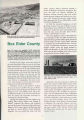
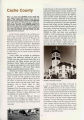
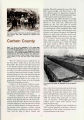
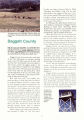
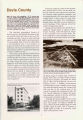
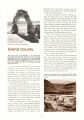
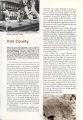
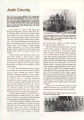
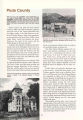
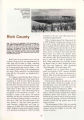
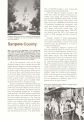
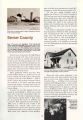
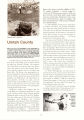
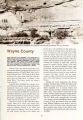
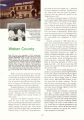
Show Delicate Arch, Arches National Park. G~ L. d. County Area: 3,689 square miles; population: 7,100; county seat: Moab; origin of county name: the Colorado River, which flows through the county, was first called the Grand River; principal clties/ towns: Moab ( 4,410); economy: tourism, agriculture, live-stock, minin ; points of interest: Arches . National Park, LaSal Mountains, & orado River, Dead Horse Po~ nSt tate Park, Dewey Bridge ( Highway 128). Grand County is situated on the Colorado Plateau in eastern Utah. The plateau includes two- thirds of the state of Utah and parts of Colorado, New Mexico, and Arizona. Com-posed mostly of sandstone and limestone, the plateau has been eroded by large rivers and other water sources into huge canyons and com-plex erosional forms that make it a rugged but scenically spectacular region. Much of the Colorado Plateau in prehistoric times was inhabited by the Anasazi. First arriv-ing perhaps as early as the time of Christ, the Anasazi had disappeared by A. D. 1300, proba-bly due to years of drought. Today the remains of their cliff houses and rock art in the canyons delight explorers. A petroglyph of a mammoth or mastadon on a canyon wall west of Moab suggests occupation by Early Man. The first white men to enter the present area of Grand County were Spanish explorers who discovered a crossing of the Colorado River at the site of the present highway bridge at Moab. Later Spanish traders and American fur trappers developed the route known as the Spanish Trail, using that crossing and one across the Green River above the present Emery County town of that name. The first attempt by Mormon colonists to settle the Moab area was a failure. The Elk Mountain Mission reached Moab Valley in 1855 and established a small community, but the In-dians who were already farming the fertile Colorado River bottoms regarded them as com-petition and drove them out after they had been there only a few weeks. Not until the very late 1870s and 1880s did a few Mormon families find it possible to build permanent homes. Most of the history of Grand County has been the story of small family farms and or-chards, mining for potash and uranium, and livestock. Large sheep and cattle companies have found abundant forage for their livestock in the canyons and the LaSal Mountains, and cowboys and outlaws figure prominently in the area's folklore. The uranium boom of the 1950s brought the first real population expansion to the area and saw the creation of a few large for-tunes - as well as many failures. Most recently the income from tourism has been the county's major economic resource. Arches National Monument was established in 1929, and consistently increasing numbers of visitors led to its upgrading to National Park status in 197 1. During the 1970s and 1980s Moab became perhaps the most important ten-ter for river- running, mountain- bicycling, and four- wheel drive recreation in Utah. Potash mill near Moab and in the distance the high peaks of the LaSal Mountains in the southeast corner of Grand County. |