| OCR Text |
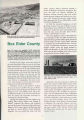
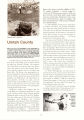
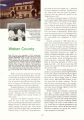
Show Emery County Area: 4,439 square miles; population: 12,200; county seat: Cas-tle Dale; origin of county name: after territorial governor George W. Emery; principal citiesitowns: Huntington ( 2,350), Castle Dale ( 2,070), Ferron ( 1,910), Orangeville ( 1,570); economy: elec-tric power generating, coal mining, livestock; points of interest: Cleveland Lloyd Dinosaur Quarry, the Green River, Joes Valley ReSe~ oir, Huntington Canyon, Emery County Museum in Castle Dale, Goblin Valley State Park, and the San Rafael Swell. Emery County in southeastern Utah is bor-dered on the north by Carbon County ( which was created from Emery in 1894), on the west by the Wasatch Plateau and the original settle-ments in Sanpete and Sevier counties from which most Emery County settlers came, on the south by the remote artificial boundary with Wayne County, and on the east by the Green River - the natural boundary with Grand County ( which was created from Emery County in 1890). Emery County includes three geo-graphical areas: the mountains of the Wasatch Plateau; Castle Valley, where the major settle-ments are located; and the desert of the San Rafael Swell, the San Rafael Reef, Cedar Moun-tain, and the remote stretches of land west of the Green River. The San Rafael River, the life-blood of the county, originates in the Wasatch Plateau where the headwaters are stored in sev-eral reservoirs for agricultural and industrial use. It flows into Castle Valley in three branches - Huntington Creek, Cottonwood Creek, and Ferron Creek - which unite to form the San Rafael River after they pass the communities and adjacent farm land. It then twists its way through the rock and desert to its junction with the Green River. Occupation of the San Rafael region dates back thousands of years to include people of the Archaic Period who were followed by those of the Fremont Culture who inhabited present- day Emery County from about A. D. 500 to 1300. Evidence of these people can still be found in numerous pictograph and petroglyph panels, such as those in Temple Mountain Wash, Muddy Creek, Ferron Box, Black Dragon Can-yon, and Buckhorn Wash, all sites listed in the National Register of Historic Places. In historic times Ute Indians occupied sites in Castle Val-ley, and travelers along the Old Spanish Trail also passed through the present county. In 1875 livestock growers from Sanpete County, recognizing the settlement potential of the region, brought cattle and sheep into Castle Valley to graze. With a shortage of sufficient land and water in Sanpete County and a strong desire by Mormon church leaders to acquire un-occupied land in the region before non- Mor-mons did, young families began moving into Castle Valley in the fall of 1877 to take up homesteads in what would become the settle-ments of Huntington, Ferron, Castle Dale, and Orangeville. Although livestock and farming remained the mainstay of the county's economy through-out most of its history, two related events af-fected the region's economic stability: the com-pletion of the Denver and Rio Grande Western Railroad through Emery in 1883 and the de-velopment of the coal mines at Scofield, Castle Gate, and Sunnyside in Carbon County by 1895. The railroad provided transportation for produce and livestock, while the mines provided a nearby market for animals and vegetables and an opportunity for some Emery residents to work in the mines during the winter and farm during the summer. The D& RGW also led to the establishment of the town of Green River, although the site had been an important part of the Old Spanish Trail and a mail station had been established there before completion of the railroad. During the 1970s Emery County's population grew significantly because of the constru. ction by Utah Power and Light Com-pany of large power plants in Castle Dale and Huntington and the opening of large coal mines to fuel the power plants. Old and new - traditional brick home in Castle Dale and in the distance a large UP& L coal- fired power plant. Cour-tesy Gary B. Peterson. |