| OCR Text |
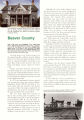
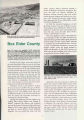
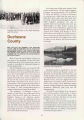
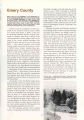
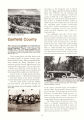
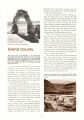
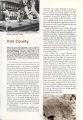
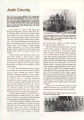
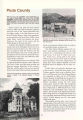
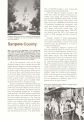
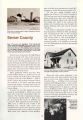
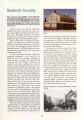
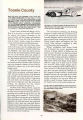
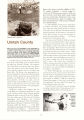
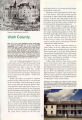
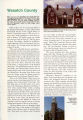
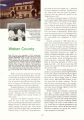
Show Piute County Area: 754 square miles; population: 1,500; county seat: Junc-tion;. origin of county name: after Paiute Indians;- principa! cities( towns: Cird~ eyille(, 440), : I( ilarysvaie ( 400) Junction ( 1' 90). ec~ npmy:~ agriC< lt~ rprerm a? ly tie6f aa_ nald& iryc: ' a'tti~@). dd? l'ca? ibinf poinfs16f~ inteiist:~ Tds~ ar. Mouitaigfit_ tesr ~ ree~ ib~@( fit$ e? e~& r; s, P iute Gbunt$ Courthouse, IPar. ker ranch1B1 it$ t~ assiBy home. Pi~ lte, County was sp1i. t off from Beai. eq C~ ulnxyin 1865. Its western bouqdary app. rox<= mates the crest of the Tushar Mountains witb the highest peaks in the High Plateaus section of the Colorado Plateau. Most of the population is concentrated in the Sevier River Valley. Grass Valley ( Otter Creek) lies between the Sevier Plateau in the center of the county and the ~ allkeRr ange on the eastern border. Evidence of prehistoric inhabitants has been found in the caves of Kingston Canyon ( now an attractive local recreation area). The county has been occupied by both the Fremont and the later Paiute Indians who were mainly gatherers and hunters of food and who produced beauti-ful baskets for many uses and rabbit- skin cloth-ing for winter protection. Circleville and Junction were settled in 1864 1 by a group of Mormon pioneers from Ephraim. fie Sevier Valley provided good grazing, and I livestock remains important to the economy. I Wild hay, alfalfa, grain, and pastures provide 1 feed for the limited beef and dairy production. Piute County Courthouse, Junction, built in the early 20th century, is listed in the National Register of Historic Pjaces, Kimberly, 1917 , was one of several m~ ningb oom towns in Piute that brought economlc prosperity to the county in the late 19th century. Earth- covered potato cellars remain as evidence of a successful crop in an earlier era. The Piute School District employs 50 resi-dents. Less obvious contributors to the local economy are a small group of retirees in the larger towns. As in most of Utah's rural coun-ties, " home" has a strong pull on the natives while economic forces tend to push recent high school graduates toward the opportunities of urban areas. Piute residents depend on nearby Richfield north on Highway 89 for major ser-vices. Earth's riches once played a dominant role in the economy. A gold and silver boom in the Tushars spawned such towns as Bullion, Kim-berly, and Marysvale. The Ohio Mining District was organized in 1868, and by 1872 Bullion Canyon boasted 50 buildings and hundreds of eager miners. Kimberly, in the Gold Mountain District, developed around the rich Annie Laurie claim, located in 189 1. The completion of a Denver and Rio Grande Railroad branch line to Marysvale in 1900 linked Piute's mines and farms to the marketplace. Later, lead, zinc, alunite, and uranium were significant products. Piute's huge reserves of high- grade alunite ores were especially important during World Wars I and 11. Cyclical mining, now in a bust mode, could boom again. Recreational activities also create some job opportunities. Piute and Otter Creek reservoirs provide good boating, water skiing, and fishing. The Parker ranch just south of Circleville has become a tourist attraction because of its associ-ation with outlaw Butch Cassidy. |