| OCR Text |
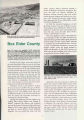
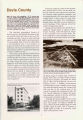
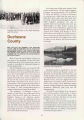
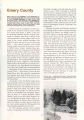
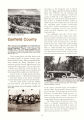
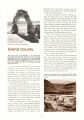
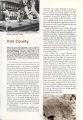
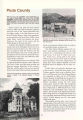
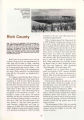
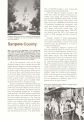
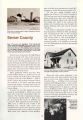
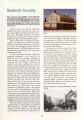
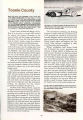
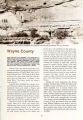
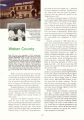
Show Early aerial view of the research and development section of Thiokol's extensive facility in Box Elder County. Sox Elder County ktgIE 5,614 sauaw mile&; mpulaUon: 36, XJD; county sest: Brigham City; origin of countytynamen: amed for the many box elder trees growing there; prlncl el cltlesRown8: Brlgham Ci 116.150b Trembnton ( 4.410). ~ a& nd 11.640). Perrv ( 1.370). Wf Ld( i,$ 20); e o o n p m ~ a g $ ae fb& a& ldefehs% poQs of Inteksto Willarrf B% y, $ tql Hat Springs, Bri ham C Museum and Wlery, iboiden S ~ l ~ l W i s& Il. ~~ bxd% t~& r LDS Tdwhaelbin Bdgham GI&, Wil( zrrd HSstericD~ stfld. Located in the upper northwest corner of the state, Box Elder County is part of the Great Basin and embraces a large land area extending from the west spur of the Wasatch Mountains to the Idaho border and westward to Nevada. It in-cludes portions of the Great Salt ~ a k aen d the Great Salt Lake Desert. On the east are the lower course and deltas of the Bear River, the Malad River Valley, and the Promontory Moun-tains. Diverse in topography, the county con-tains rich farmlands as well as extensive marsh-lands at the mouth of the Bear River. Prehistoric hunters and gatherers roamed the area as early as 12,000 years ago, as did In-dians of later periods. Danger, Promontory, and Hogup Caves, surrounding Great Salt Lake, and Shallow Shelter in the Grouse Creek Moun-tains are among the important excavated ar-chaeological sites in Box Elder. During the 1820s and ' 30s fur trappers, in-cluding Peter Skene Ogden and Joseph R. Walker, explored the eastern and northern parts of the county. Permanent white settlement began in 1851 when a group of Mormons took up land in North Willow Creek ( Willard). Brigham City was settled that same year and under Lorenzo Snow's direction became a model of Mormon cooperative enterprise. Be-cause the land was already inhabited by Shoshone Indians, livestock raids and violent clashes between Indians and settlers were com-mon until Territorial Governor James Duane Doty negotiated the Treaty of Box Elder on July 30, 1863, in Brigham City. In 1856 the territorial legislature created Box Elder County from part of Weber County. Its boundaries were redefined in 1880 when the legislature divided the water and islands of the, Great Salt Lake among Salt Lake, Davis, Weber, Tooele, and Box Elder counties. The most significant event in Box Elder his-tory took place on May 10, 1869, at Promontory when the driving of the Golden Spike joined the Central Pacific and the Union Pacific railroads to complete the transcontinental line. Corinne, a feisty, non- Mormon boomtown, became the freight transfer point for goods shipped to Idaho and Montana. In July 1870 Corinne resi-dents spurred the founding of the Liberal party to oppose the Mormon People's party. ~ tah- ldahoS ugar Company refinery in Garland, October 1960. Once a major agricultural product, sugar is no longer refined in Utah. Agriculture has always played an important role in the economy of Box Elder County. Some 43 percent of the county's land is used for ag-ricultural purpqses. Besides the standard crops of hay, grain, and alfalfa, sugar beets were also raised, starting in 190 1, and kept two sugar fac-tories, one in Garland and the other in Brigham City, operating for many years. Abundant fruit orchards and garden crops continue to contrib-ute to the local economy. Since 1957, when Thiokol Chemical ( now Morton- Thiokol) began its Brigham City operation, defense and aero-space have dominated the local economy and presently employ 5,000. Morton- Thiokol built the Minuteman missile and the space shuttle booster rockets. |