| OCR Text |
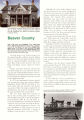
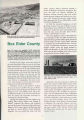
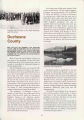
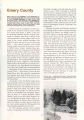
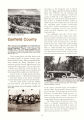
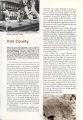
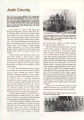
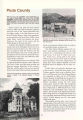
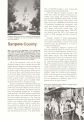
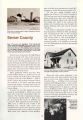
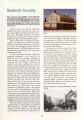
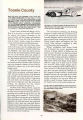
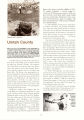
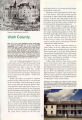
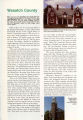
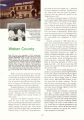
Show Juab County Am:. 3,412 square miles; papuPlltion: 5,900; county wat: Neph~ o; rigin of coun name from the Ute word meaning flat or M plain; principal aC* M.. nr: Nephi ( 3,5W), Eureka ( W), Mona ( 590), Levan ( 530); economy: agncunure, manufacturing, mining, recreation; nts of intsrert: HIstonc Tintic Mmi Dis-trict. Little Sahara & tion Arm Old Pony E x p andqtage Route, Yuba Reservoir, Goshute 1ndi. m Resew on, Tintic Mining Museum in Eureka, Mwnt Nebo Wilderness Area, Fish Springs National Wiklllfe Refuge. Juab County is a part of the Basin and Range physiographic province. Most of the fer-tile farming land is located in the Juab Valley near Nephi at the base of Mount Nebo ( 1 1,877 feet). The western portion of the county consists of broad, semiarid valleys and low desert moun-tains. The Wasatch Mountains are located to the east, and moving west there are the East Tintic Range, West Tintic Range, Thomas Range' ( Topaz Mountain, 7,113 feet), Fish Springs Range, and the southern tip of the Deep Creek Range in the extreme northwest corner of the county. Archaic Period and Fremont Culture sites have been found in Juab County. Nephi Mounds north of Nephi is one of the most im-portant Fremont agricultural sites in the eastern Great Basin. A portion of the Goshute Indian Reservation is located in the northwest corner of the county. In 1776 the Dominguez- Escalante expedi-tion crossed the county at the eastern end, from north to south, passing near present Nephi. Jedediah S. Smith traversed the western end of the county in 1826 and via Fish Springs in 1827. In 1843- 44 John C. Fremont journeyed through the county's eastern end on his way north. Government explorers John W. Gunni-son and J. H. Simpson traveled in the area in 1853 and 1859 respectively. Gunnison visited the southeast portion of the county while Simpson located the route later used by the Pony Express and transcontinental telegraph. During 1860- 63 Goshutes attacked an over-land mail station at Willow Creek. As a result, I the U. S. Army set up a camp at Cedar Summit and a cantonment at Fish Springs in 1863. In 1852 the legislative assembly created Ju'ab 1 County, which extended as a narrow strip to what was then the western boundary of Utah Territory ( now the western boundary of Nevada). The western portion was reduced in 1854 and 1856 to form counties in Nevada, Turn- of- the- century home of rancher and businessman George C. Whitemore in Nephi. A thriving livestock and distribution center in the early 20th century, Nephi was sometimes called Little Chicago. and several other changes in Juab's borders have been made over the years. The first settlement in Juab Valley occurred in 1851 when a group of Mormon settlers ar-rived near Salt Creek at present- day Nephi. Their economy was based primarily on agricul-ture. In 1869 precious metals were discovered in the Tintic region, changing the economic and industrial destiny of Juab County. The towns of Diamond, Silver City, Mammoth, and especially Eureka became the main areas of the Tintic Mining District, which by 1899 was labeled one of the foremost mining districts in the country. From 1870 to 1899 Tintic produced approxi-mately $ 35,000,000 in mineral wealth. The met-als in Tintic consisted of silver, gold, copper, lead, zinc, and some uranium at Topaz Moun-tain. Mining continued through the 1950s, and even today some mining operations continue on a small scale. In recent years several small man-ufacturing firms have helped to diversify Juab's economy. Recreation at the White Sand Dunes, Little Sahara Recreation Area, remains very popular, attracting tourists and visitors to western Juab. Mammoth Brass Band, 1906. Almost every town in Utah had a band in the early 1900s. |