| OCR Text |
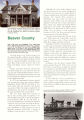
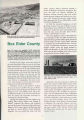
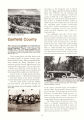
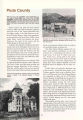
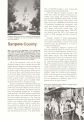
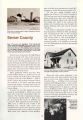
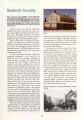
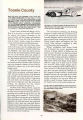
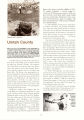
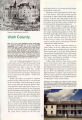
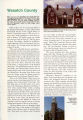
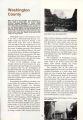
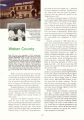
Show Millard County Area: 6,818 square miles; population: 14,200; county seat: Fillmore; origin of county name: after President Millard Fillmore; principal citiesnowns: Delta ( 3,530), Fillmore ( 2,800), Hinckley ( 940); economy: alfalfa seed, cattle, electric power generating; points of interest: Territorial Statehouse in Fillmore, Cove Fort, Old Fort Deseret, Topaz Relocation Camp, Gunnison Massacre site, Clear Lake Waterfowl Management Area, Intermountain Power Project. Millard County is bordered on the east by the Pahvant Range. West to the Nevada border lie the broad valleys and desert mountain ranges typical of the Great Basin. The Sevier River, which begins in mountains east of Cedar City, drains into the sometimes dry Sevier Lake in central Millard. A huge granitic upthrust in the House Range, volcanic cones, and numer-ous fossil beds provide clues to past geologic ac-tivity and prehistoric animal and plant life. The county is known for a Folsom Early Man site in the Sevier Desert occupied 7,000 or 8,000 years ago. In addition, the Fremont Cul-ture which disappeared ca. A. D. 1300 lived in small villages with semi- subterranean dwellings. Historic 1ndian groups include Southern Paiutes, Pahvant Utes, and Goshutes. A small Indian reservation is located at Kanosh. In October 1851 two groups left Salt Lake City for east Millard County. Some 30 families led by Anson Call made the first permanent white settlement, while territorial officials, in-cluding Gov. Brigharn Young and surveyor Jesse W. Fox, selected a site for the capital, Fillmore being near the geographical center of Utah Territory. The legislature met in Fillmore a few times, but in December 1856 it voted to move the capital to Salt Lake City because Fillmore was too far from major cities. On October 26, 1853, seven members of a I transcontinental railroad survey team led by Lt. John W. Gunnison of the Topographical En- I gineers were killed southwest of Delta by In-dians, a tragic incident in the Walker War ( 1853- 54) that was apparently triggered by the hostile actions of a group of emigrants against the Indians. Ranching and farming developed slowly. In the early 20th century Millard was second to I Tooele in the number of sheep on its ranges, but later cattle became the major livestock inter-est. The establishment of the Union Pacific line through west Millard County and the founding Threshing alfalfa seed hay on the John C. Webb farm, Hinckley, ca. 1901. of Delta in 1907 led to the most important ag-ricultural development - large- scale alfalfa seed production amounting eventually to three-fourths of the state's crop. The Yuba Dam and other water projects made this venture possible. During World War JI the federal govern-ment forcibly relocated 110,000 Japanese- Americans from their West Coast homes to spe-cial camps. Topaz, a relocation center near Delta, housed some 8,700 internees, making it the largest " city" in Millard for a few years. Internees arriving at Topaz, a barracks city built south of Delta during World War II. Mining and smelting have contributed to economic growth with Millard producing signif-icant amounts of fluorspar, copper, manganese, sulphur, gypsum, beryllium, and salt. The most important industrial development, however, began in the 1970s when plans were made for the Intermountain Power Project's huge coal-burning plant near Delta. Southern California buys much of the electricity generated here. Territorial Statehouse. Fillmore, is now a museum. |