| OCR Text |
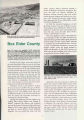
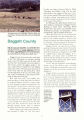
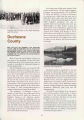
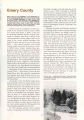
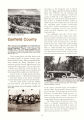
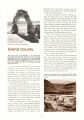
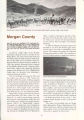
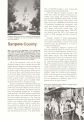
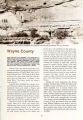
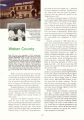
Show Recently shorn sheep from the Bertagnole ranch are being herded toward a summer range in East Canyon. Morgan County Area: 603 square miles; population: 5,200; county seat: Mor-gan; origin of county name: after LDS leader Jedediah Morgan Grant; principal citiesltowns: Morgan ( 1,990); economy: live-stock, manufacturing; points of interest: Lost Creek State Park, East Canyon State Park, Mountain Green trappers confrontation site. Located in a high valley of the Wasatch Mountains, Morgan County is divided by the Weber River. The many streams that feed into the Weber made the valley attractive to fur trap-pers in the 1820s and to prehistoric Plains In-dians and historic Shoshone and Ute Indians. In 1825, near present Mountain Green, trappers of the British Hudson's Bay Company under Peter Skene Ogden and competing American trappers came dangerously close to fighting, but Ogden kept the situation from becoming a major international incident. The city of Morgan was settled in 1855, and the county was created in 1862. During the Utah War ( 1857- 58), settlers in Milton supplied feed for the horses of Mormon troops stationed in canyon passes watching for Johnston's Army. Lot Smith of Stoddard blocked Echo Canyon, burned U. S. Army supply trains, and stam-peded government horses and cattle. Despite such incidents, the " war" was settled peacefully. Morgan has a larger percentage of privately owned land than any other county in Utah. Much of it is used for stock raising, especially beef and dairy cattle and sheep, and for hay and other field crops. Lumber was a major industry during 1860- 75 in Hardscrabble Canyon. Thousands of railroad ties were furnished to build the Union Pacific Railroad line, and char-coal was shipped to Bingham for use in smelt-ing. During the building of the UP Railroad in 1868, a number of businesses opened in Mor-gan City and it became the county's trade cen-ter. Some say it was the only incorporated city on the UP line between Ogden and mah ha, Nebraska. In 1904 the Morgan Canning Company was founded to can peas. The business grew and a second factory was built in Smithfield, Cache County. The company was sold to the California Packing Corporation in 1928. The manufactur-ing of Portland cement is a major local industry. Devil's Slide cement manufacturing plant. This important industrial product has been pro-duced at the Devil's Slide plant for more than 80 years. In addition to limestone - the main in- 8 gredient in cement - silver, lead, copper, coal, iron, sulphur, and mica have been found in Morgan, , but most mining has been on a small scale. Agriculture, manufacturing, and trade do not provide enough jobs for residents, and in recent years more than half of those employed - the largest percentage in any county - have worked outside Morgan, mostly in the greater Ogden area. The county has benefited from the Weber Basin Reclamation Project. Beginning in 1952, federal funds were used to construct dams and power plants. The Lost Creek and East Canyon reservoirs are popular recreation sites. |