| OCR Text |
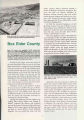
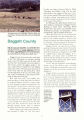
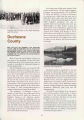
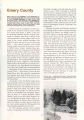
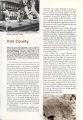
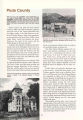
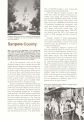
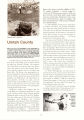
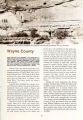
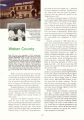
Show The Swett ranch from Greendale overlook, Ashley Na-tional Forest, represents early 20th- centuty homesteading in Utah. Daggett County Area: 682 square miles; population: 700; county seat: Manila; orisin of county name: after Ellsworth Daggett who helped devel-op ~ rrigationfo r the county; principal citiesltowns: Dutch John ( 280), Manila ( 270); economy: electric power enerating, lumber-ing, livestock; points of interest: Flaming 8orge Recreational Area, Ashley National Forest, Jarvie Ranch in Brown's Hole. Daggett County is located on the north slope of the Uinta Mountains, an east- west running range some 150 miles long and 30 miles wide that has been dramatically carved by glaciers. The Uintas contain the highest peaks in the state. Leidy Peak at 12,028 feet is the highest peak in the county. The Uintas are the source of much of the water for the Green River which cuts through them at the east end of the range. The county is bordered on the north by Wyo-ming, on the east by Colorado. Rich with trees, water, and wildlife, Clay Basin and Brown's Hole along the Green River in northeast Daggett served as a winter refuge for both migratory animals and prehistoric In-dian groups. The first known white men to visit the county were fur trappers who, in the 1820s' came to the mountains trapping for beaver. Perhaps the most famous of these was General William Henry Ashley. In 1825, after organiz-ing a fur company in St. Louis, he traveled to the Green River country to see for himself the land of the beaver and other wildlife. That same year he floated down the Green into the Uinta Basin and then traveled by horse and foot through Summit County back to southern Wyoming whe; e the first rendezvous was held. Other trappers and traders soon followed in the footsteps of Ashley. In 1837 Fort Davey Crockett was built at Brown's Hole by Philip Thompson and William Craig. The fort sup-plied goods to the trappers of the area. A Ger-man traveler named Wislezenus described Fort Crockett as being " somewhat poverty- stricken, for which reason it is also known to the trappers by the name of Fort Misery." In 1869 and 1871 John Wesley Powell, a fa-mous explorer, visited parts of Daggett County. Starting at Green River, Wyoming, Powell floated down the Green and Colorado rivers, studying the geology and geography, animal and plant life, and the Indims of the area. About this same time it was rumored that the Uinta Mountains were full of diamonds. Im-portant and wealthy people in America and Europe invested in the claims, hoping to make a lot of money. They soon found out that the dis-covery of diamonds in the Uintas was a hoax. Daggett County was used for the summer grazing of sheep and cattle trailed in from parts of northern Utah and southwestern Wyoming until the introduction of irrigation in the 1890s by Adolph Jessen, Ellsworth Daggett, R. C. Chambers, and others made it possible for farmers and their families to live there. The first permanent settlers included the James Warby and Franklin Twitchell families. In 19 17 the state legislature created Daggett County out of the northern part of Uintah County, and Manila was named the county seat. Daggett was the last of the state's counties to be organized. Daggett County's economy is based primar-ily on the raising of livestock, hay, and alfalfa, but it is also an important producer of electric power for Utah and surrounding states. A new town, Dutch John, was built in 1957 near Flam-ing Gorge to provide a living place for people who work at the dam. Flaming Gorge Reservoir is a popular place for boating and fishing. Ute Mountain fire tower, built by the Civilian Conservation Corps in 1937, is listed in the National Register of Historic Places. |