| Title |
EPA administrative orders, 1991-1997 |
| Alternative Title |
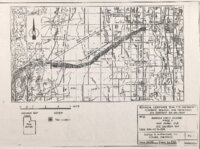
North facility soils and wastewater treatment plant ponds site removal action, SSID # 4B statement of work; Bingham Creek channel site, phase 2, SSID # T4, statement of work; AOC/Work plan for cleaning of Kern River pipeline corridor near Bingham Creek |
| File Number |
2107_042_003 |
| File Name |
2107_042_003.pdf |
| Description |
Administrative orders issued by the U.S. Environmental Protection Agency Region 8 office between 1991 and 1995. Administrative orders on consent address removal of toxic soils and sludge from the following sites on Kennecott property: North facility soils and wastewater treatment plant ponds (site 4B); and Herriman residential soils (site R2); and Kern River gas pipeline corridor (site R7). Also a "unilateral administrative order" for removal action issued 1993 for removal action at the Bingham Creek channel site (phase II, site T4) [nine copies], and a "statement of work" [duplicate from folder 2, with four copies in this folder]. This digital file contains the entire contents of folder 3 from box 42 of the Supefund Records Center records collection. |
| Creator |
United States. Environmental Protection Agency. Region VIII |
| Date |
1991; 1992; 1993; 1994; 1995; 1996; 1997 |
| Spatial Coverage |
West Jordan, Salt Lake County, Utah, United States; Salt Lake County, Utah, United States |
| Subject |
Soil pollution--Utah--Salt Lake County; Soil remediation--Utah--Salt Lake County; Hazardous waste site remediation--Utah--Salt Lake County; Hazardous wastes--Management--Utah--Salt Lake County; Mines and mineral resources--Environmental aspects--Utah--Salt Lake County; United States. Comprehensive Environmental Response, Compensation, and Liability Act of 1980--Archives |
| Collection Number and Name |
Accn2107 Superfund Records Center records |
| Holding Institution |
Special Collections, J. Willard Marriott Library, University of Utah |
| Finding Aid |
https://archiveswest.orbiscascade.org/ark:80444/xv19958 |
| Type |
Text |
| Genre |
reports |
| Format |
application/pdf |
| Language |
eng |
| Rights Management |
This digital file is comprised of multiple documents with varying copyright status. Users are responsible for determining the copyright status of these documents. |
| Rights |
 |
| ARK |
ark:/87278/s62zdsbr |
| Metadata Cataloger |
Ken Rockwell |
| Setname |
uum_srcr |
| ID |
2624355 |
| Reference URL |
https://collections.lib.utah.edu/ark:/87278/s62zdsbr |
| Title |
Page 361 |
| Format |
application/pdf |
| Setname |
uum_srcr |
| ID |
2624716 |
| OCR Text |
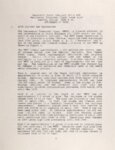
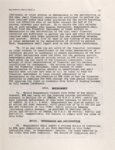
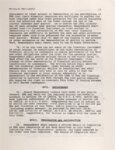
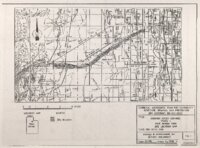
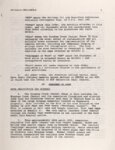
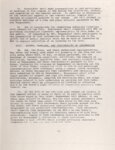
Show BINGHAM CREEK CHANNEL .SSID # - PHASE 2 T4 STATEMENT OF WORK I. SITE HISTORY AND EACKGROUND Bingham primary Creek the of originates in the Bingham Canyon and was the drainage from the mining district in this area Although historically, water from the mining district flowed in the channel, the Large Bingham' Reservoir now contains all the The reservoir is located flow from the canyon. nearly in Western Salt Lake County, Utah approximately one-half mile East of Copperton, Uth in Section 17, Township 3 South, Range· 2 West, Salt Lake Base and Meridian. The channel starts at toe .. the reservoir. The channel passes t.h rouqh several miles of Kennecott property before reaching a county gravel plant and a brick factory, and then entering residential areas at 4800 West. The channel is accessible year-round and is ued as a recreational area and trail by residents in the area. It serves as a storm water and receives runoff events drainage during irrigation wastewater. Sampling in 1992 by the EPA indicated'high levels of lead and arsenic in the soil in Bingham Creek Channel. Samples were collected through residential reaches and from upper reaches on The ·tailings in the upper CO and Kennecott property. reaches also indicated elevated levels of lead and arsenic consistent with those found down channel. Lead and 'arsenic at were identified the Site as the contaminants of ·concern. These are hazardous substances, as defined by § 101(14) of CERCLA, that were eleased into the environment through mining and beneficiation processes in the Bingham ·Canyon. Mining waste (tailings), were discharged directly to. Bingham Channel and deposited along the banks of the channel upstream from the residential areas. The mining waste was transported primarily by. normal runoff events and The last major flood through the Bingham Creek flooding. Channel occurred in 1983. Precipitation events continue to erode tailings into the channel. Contaminated· soil is also wind-blown and disturbed during development activities. Dust-size particles (especially those with diameters of 100 microns or less), are a significant and are transported by wind and human source of exposure, 2 |
| Reference URL |
https://collections.lib.utah.edu/ark:/87278/s62zdsbr/2624716 |