| OCR Text |
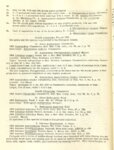
Show 44 Leg-bearing cles. Tracheae in number. Nine or more pairs of spira into tergites and pretergites. Pre divided The tergites often a median suture. without The young maxillae Coxal plates of the somites 21, 23, anastomosing. or 31 to 191 sternites always present. leave the egg with the full number of legs. There the Philippines. Key 1a. lb. three are to A or more with Development anamorphosis. 1. Order Geophilida Chamberlin families, four genera and nine species belonging key for their identification is given below: Families, Genera and Species of Geophilida the to this order known from Philippine Islands of the Mandible with several pectinate lamellae (without dentate lamellae) Mandible simply beset with one row of teeth on margin (without a dentate lamellae), coxae of first maxillae fused each bearing a medial process and a one or two jointed telopodite; labrum consisting of one piece. Antennae at the base and tapering; coxae of the last pair of legs flattened generally • .. enlarged, extending sometimes to the third segment from behind, Last pair 3 Family Gonibregmatidae paratergites generally present of legs 7 jointed; telopodite of 2nd maxillae as usual, three jointed with a smoothened claw, representing the 4th joint or pretarsus; first maxillae without lobate palp., the telopodite not jointed; labrum vaulted; paratergites present on the hindermost segments in as many as 6 rows; tergites folded; ventral pores in 4 Genus Gonibregmatus. a rectangle, its middle are remaining free of pores the first of leg-bearing segment sharply separated from the (Paratergum 9 Gonibregmatus cumingii. 161 no frontal .furrow; pairs of legs) tergum; Labrum consisting of one piece, not especially broad; the sides of cephalic pleura without strong edges; coxae of first maxillae completely fused, forming a syncoxite; ventral pores present; paratergites generally present. Antennae tapering, with short hairs only; toxicognaths small, not or hardly visible from above 1 Family Oryidae Last pair of legs 7 joints; scuttelum and pre scutellum separate, at least in the middle and posterior segments; claw of second maxilla pectinate or with lateral bristles in the basal half; one row of paratergites; mandible with 2 to 5 pectinate lamellae; female genital 1 Genus Orphnaeus appendage 2-jointed (Sternite of last legs short and broad, posteriorly truncate; ventral pores present on the posterior segments in great numbers and arranged in four areas; 81 to 83 pairs of legs 1 Orphnaeus brevilabiatus (Newport). Labrum tripartite, one small median tooth and two broad lateral pieces with strong edges at the sides of cephalic pleurae; coxae of first maxillae meeting at the median suture; ventral pores wanting; paratergites absent; antennae filiform, the basal joints with long bristles; toxicognaths very large, visible from above 2 Family Mecistocephalidae The coxae of the last legs reach laterally over the preceding leg-bearing segment; the last leg-bearing segment without conspicuous presternum; the basal shield with deep, median longitudinal furrow; 3 Genus Megethmus The coxae of the last legs do not reach over the preceding leg-bearing segment; the latter with presternum; the basal shield without longitudinal furrow; the pleurae of head in front with a strong conical tooth; the prefemur of the toxicognaths often with 2 teeth 2 Genus Mecistocephalus 101 pairs of legs; toxicognaths with 2 small teeth in front of the coxae; the coxae of the last legs laterally extend forward unto the anterior border of tergum; terga from the sixth one bisulcate; antennae short, not much longer than the head Megethmus microporus Haase. 2 much ..... ..... ..... · .•.. ..... 2a. .....•. · . . . . . · . • . . . . . . . . . . . . . . . . . . . . . . . . . .......•.•.•..• ....•...••. 2b. .......•..• · 3a. . . . • • . • . . . . . . . ••.. 3b. ............•...... 4a. . • . . . • . • .. . • . . . . • . . . • • . . . ..•... . · . • . . . . . . . . . . . .• 3 . .. 4 . • . . . . . " 5 8 |