| OCR Text |
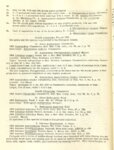
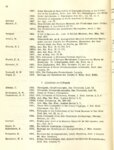
Show 25 28. Spirobolus 1878 Z. Wiss. Zool. XXXI, p. 187 Locality: Philippine Islands. 29. 1878 Z. Wiss. Zool. XXXI, (?) flavo-punctatus Voges _ auratus Spirobolus (?) Voges p. 187. Locality: Philippine Islands. 30. Spirobolus (?) cupulifer Voges 1878 Z. Wiss. Zool. XXXI, p. 188. Locality: Philippine Islands. 31. Spirobolus (?) segmentatus Karsch 1881 Z. Ges, Naturw. (3) VI, p. 75. Locality: Philippine Islands. Type: Berlin Museum, Germany. Family Rhinocridae Brolemann 1914 1 "I ' 14. Genus Acladocricus Brolemann 1897 Rhinocricus. (in part) Silvestri, Abhandl Mus. Dresden 6, Pt. 9. 1897 Rhinocricus (in part) Attems, Abhandl Senckenb, Gesellsch 23, p. 527. 1912 Rhinocricus (in part) Carl, Rev. Suisse Zool. 20, p. 170. 1913 Dinematocricus, subgen. Acladocricus Brolemann, Records of the Australian Museum. Vol. X, No.6, p. 123. 1914 Polyconoceras subgen. Acladocricus Attems Arch. Naturg. 80, A4, p. 309. 1920 Acladocricus Chamberlin, Bull. M. C. 2, Vol. LXIV No.1, p. 177. Generotype: Rhinocricus pyrrhomola (Attems) 1897 Acladocricus pyrrhomola (Attems) Below is given all the species yet known through the Indian-Australian region as well as ,f ,/ = those present at the Philippine Islands. Key to Species of Genus Acladocricus (Brolemann) Chamberlin 1a. Style of posterior gonopods recurved. (length moderate, about 75 mm. in length; scobina to 36th segment; posterior legs with tarsal cushion; the tongue of the ventral plate never surpassing the distal joint and the coxal piece of the .antertor A. pyrrholoma (Attems) gonopods; number of segments 46). of not but or curved. -:-. 2 Style posterior gonopods recurved, straight The tongue of the ventral plate distinctly surpassing the distal joint and the coxal '. 9 piece of the anterior gonopods The tongue of the ventral plate paralleling to the distal joint and the coxal piece of the anterior gonopods 3 The tongue of the ventral plate falling shorter than the distal joint and the coxal 4 piece of the anterior gonopods. Length 50-75 mm.; number of segments 44-46; without a pointed small tail on the anal tergite; the oblique stria of the prozonite is dorsalward less distinct and the stria located not directly under the poreslevel; (scobina from 7th to 32nd segment; legs with tarsal cushion) . lb. 2a. 2b. . 2c. 3a. . . • . . . ..• . . . • . . • • • • . . . • . . . • . • . . . . . .. . . . . . . . . . • .. . . . . . . . . . . . . • . . . . . . . . . • . . . . . . .. . . . . . . • . . • . . . . . . . . . • . • . . . . . . . . •. . • . . . . . . . . • . . . . . • . . . . • . . . . • . .•..........•.........•...•.....•.. A. 3b. macassarenus Length 100 mm.; number of segments 56; anal tergite with a small tail; the oblique stria of the prozonite is dorsalward much distinct and the stria located directly under the pores-level; (scobina from 6th to 36th tergites; legs with tarsal cushion) A. filosus 3c. (Carl) Length 105-110 mm.; number of segments 48-51; with a short, strongly rounded so distinctly like such as the two tergite; former species and more or less appeared smooth; (scobina only extending to 30th segment; legs with tarsal cushion A. montivagus (Carl) small tail .. (Silvestri) on the anal the stria not ......•........•...•...•....••.. |