| OCR Text |
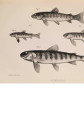
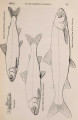
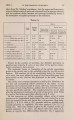
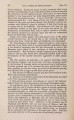
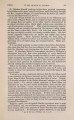
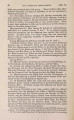
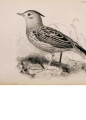
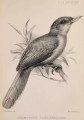
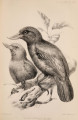
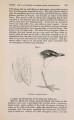
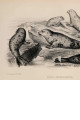
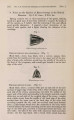
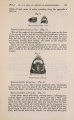
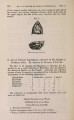
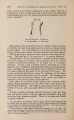
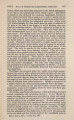
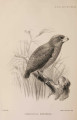
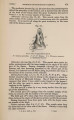
Show 750 MR. MORTON ALLPORT ON THE [Nov. 15, is pleasant neither to sight nor smell. But there is something extremely ludicrous in the notes of these young birds, resembling, as they do, the shrill half hysterical laughter of a female exhausted by over indulgence in mirth. A few summers ago there was a brood of young Urracas in a tree close to m y house. Every time we heard the parent bird hurrying to her young with food in her beak we used to run to the door to hear them. As soon as the old bird reached the nest they would burst forth into such wild extravagant peals, and continue them so long, that we could not but think it a rich amusement to listen to them. When taken young, Urracas become very tame aiid make bold, noisy, mischievous pets, fond of climbing over and tugging at the clothes, buttons, and hair of their master or mistress. Though somewhat fierce-looking, the Urraca is the most peaceable of birds, never quarrelling with his fellows. Their food, like that of the Cuckoos, consists principally of large insects ; they also prey on mice and small reptiles, and in winter and spring may be seen following the plough to pick up worms in company with the Blackbirds, Gulls, and other species widely differing in their natures. j a m > y o u r g &Qf WILLIAM H. HUDSON. The following papers were read :- 1. Additional Notes on the Introduction of Salmonidce into Tasmania. By M O R T O N A L L P O R T , F.Z.S., F.L.S. Dr. Gunther has written informing me that the Salmonoid sent to England at the end of last year, and referred to in m y former paper*, was an example of Sea-trout (Salmo trutta). This determination of the species would have sufficiently proved the success of the experiment as to one of the migratory Salmonidae, had not Dr. Gunther added the following remarks : - " I am informed that a lot of Sea-trout eggs were forwarded to Tasmania several years ago and hatched in M a y 1866. If you never on any other occasion received eggs of Salmo trutta, it would follow that this example is three and a half years old, and consequently a what may be called stunted individual, as a fish of that age ought to have attained to a larger size, and to exhibit a certain development of the sexual organs, of which no trace could be discovered in the individual sent. As it often, almost always, happens that individuals from the same lot of eggs are very unequally developed, the condition of this individual does not prove that its brethren are in an equally undeveloped state ; others may have attained to the normal size and weight." Having carefully watched the progress of the fish in Tasmania, I am unable to reconcile this assumption, that the specimen sent to England must necessarily be 3| years old, with the facts. The Tasmanian Salmon Commissioners received but one shipment * P. Z. S. 1870, p. 14. |